







What's Happening?
Artificial intelligence (AI) is significantly transforming wearable health technology, bringing advanced tools like AI, telehealth, and remote patient monitoring into primary care. Dr. Andrew Moawad, a board-certified internist and clinical informatician,
highlights that AI is not intended to replace doctors but rather to augment their capabilities, enabling earlier disease detection and allowing physicians to dedicate more time to patient interaction. AI-powered tools are already proving effective in identifying health issues before symptoms manifest, such as an FDA-cleared continuous AI sepsis monitor that can flag sepsis up to 48 hours earlier than human clinicians. Additionally, AI is being used in radiology and pathology to screen images faster and detect microscopic details, acting as a partnership with physicians. Multi-cancer early detection blood tests, which analyze cancer DNA patterns in the bloodstream, are also becoming a reality, offering a non-invasive way to gather more information during routine check-ups.
Why It's Important?
The integration of AI into wearable health technology holds immense importance for the U.S. healthcare system. By enabling earlier detection of critical conditions like sepsis and various cancers, AI can significantly improve patient outcomes and survival rates. This proactive approach to healthcare can also lead to substantial cost savings by reducing the need for intensive treatments associated with late-stage diagnoses. For primary care, AI-driven remote patient monitoring and telehealth capabilities can enhance accessibility, particularly for patients in remote areas or those with chronic conditions, reducing hospital readmissions and improving overall health management. The ability of AI to process vast amounts of data quickly and accurately allows doctors to make more informed decisions, ultimately leading to more personalized and effective patient care. This shift empowers both patients and providers with better tools for health management and prevention.
What's Next?
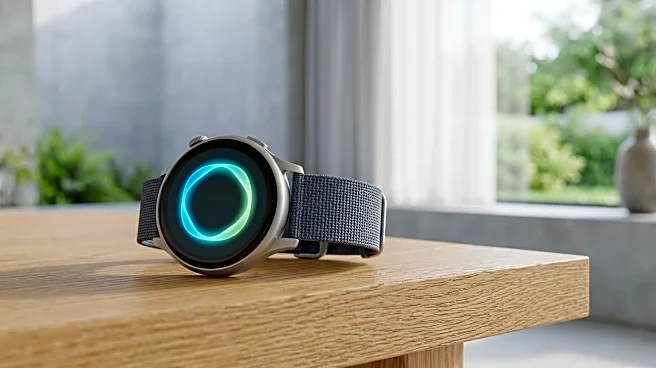
In the coming years, Dr. Moawad anticipates further advancements, including ambient listening technology that will free doctors from note-taking, allowing them to spend more face-to-face time with patients. AI models are also expected to predict the efficacy of drugs and cancer targets even before laboratory research is complete. The continued development of AI in radiology and pathology will likely lead to even greater accuracy and efficiency in diagnostics, with false positives expected to decrease as the technology matures. The focus will remain on responsible AI use, with safeguards and regulations to prevent misuse, similar to other powerful technologies. Patients will be encouraged to utilize wearable health data, such as from smartwatches or rings, to track metrics like sleep scores, resting heart rate, and activity levels, and discuss these with their doctors to inform behavioral changes and preventive care strategies.
Beyond the Headlines
The ethical implications of AI in healthcare are profound. While AI offers unprecedented opportunities for early detection and personalized medicine, concerns about data privacy, algorithmic bias, and the potential for over-reliance on technology must be addressed. Ensuring that AI tools are developed and implemented responsibly, with rigorous validation and oversight, is crucial to maintaining patient trust and preventing unintended consequences. The concept of AI as a 'partner' to doctors, rather than a replacement, emphasizes the enduring value of human expertise, empathy, and critical thinking in medical practice. This evolution also necessitates ongoing education for healthcare professionals to effectively integrate AI tools into their practice and interpret AI-generated insights. Ultimately, the goal is to leverage AI to create a more efficient, accessible, and patient-centric healthcare system, while upholding ethical standards and human values.