







What's Happening?
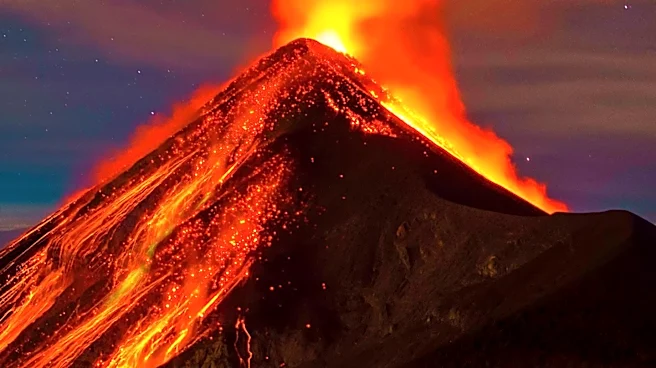
In 536 AD, a series of volcanic eruptions led to a significant climate cooling event, known as the Late Antique Little Ice Age, which lasted until 660 AD. These eruptions released sulfate aerosols into the atmosphere, causing a drop in temperatures by
as much as 2.5°C in Europe. The resulting climatic changes led to widespread crop failures and famines, notably in China and Europe. Historical records from the time describe a dimmed sun and unusual weather patterns, contributing to what historian Michael McCormick calls 'one of the worst periods to be alive.'
Why It's Important?
This historical event underscores the profound impact that natural disasters can have on global climate and human societies. The volcanic winter of 536 AD serves as a reminder of the vulnerability of human civilizations to environmental changes. Understanding such events is crucial for modern climate science, as it provides insights into the potential consequences of current and future climate disruptions. The historical context also highlights the importance of preparing for and mitigating the effects of natural disasters to prevent widespread societal impacts.