
What's Happening?
Santa Clara County's Board of Supervisors is taking steps to protect voting rights and encourage local election participation, particularly among Black community leaders. This initiative follows the U.S.
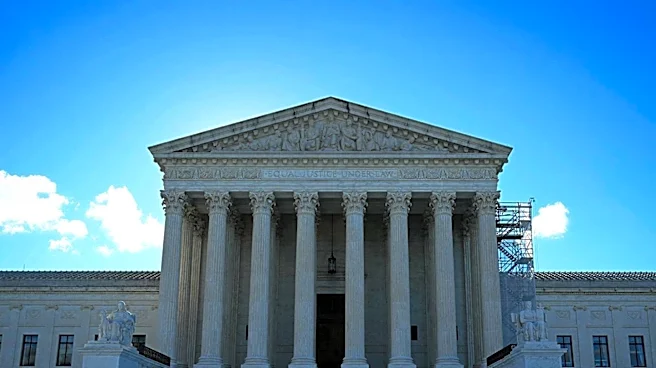
Supreme Court’s April 29 ruling in *Louisiana v. Callais*, which has been interpreted as weakening the Voting Rights Act and making it more challenging to establish majority-minority districts. District 1 Supervisor Sylvia Arenas introduced the proposal, emphasizing the need for immediate action against what she described as a threat to civil rights. The Board has approved a plan to draft a resolution to safeguard voting rights, which is scheduled to be presented to supervisors on September 15. Additionally, the supervisors formally endorsed the California Voting Rights Act of 2026, specifically Senate Bills 1164 and 1360, which aim to prevent voter suppression and are currently awaiting Governor Gavin Newsom’s signature. NAACP of San Jose/Silicon Valley President Sean Allen expressed concerns that the Supreme Court decision could hinder the election of people of color locally.
Why It's Important?
This action by Santa Clara County is significant as it represents a direct local response to a U.S. Supreme Court decision that has national implications for voting rights. The *Louisiana v. Callais* ruling has raised concerns among civil rights advocates about its potential to undermine protections against racial gerrymandering and make it more difficult for minority groups to achieve fair representation. By proactively drafting a resolution and supporting state legislation, Santa Clara County is attempting to mitigate the perceived negative effects of the Supreme Court's decision within its jurisdiction. This effort highlights the ongoing tension between federal judicial interpretations and local governmental actions regarding election integrity and equitable representation. The involvement of Black community leaders and organizations like the NAACP underscores the perceived threat to the political power and electoral opportunities of communities of color, making this a critical issue for democratic participation and civil rights in the U.S.
What's Next?
The next step for Santa Clara County is the presentation of the drafted resolution to protect voting rights to the Board of Supervisors on September 15. If approved, the resolution will formalize the county's commitment to safeguarding electoral processes. Concurrently, the California Voting Rights Act of 2026 (Senate Bills 1164 and 1360), which the supervisors have formally supported, awaits Governor Gavin Newsom’s signature to become law. These state bills are designed to prohibit voter suppression and would provide a broader legal framework for protecting voting rights across California. Local organizations, such as the NAACP of San Jose/Silicon Valley, plan to intensify their efforts to educate residents on the voting process and engage communities that may not be politically active, particularly focusing on cities with at-large voting systems like Cupertino and Mountain View, where the Supreme Court decision could have a more pronounced impact on minority representation.
Beyond the Headlines
The county's initiative extends beyond immediate legal and political responses, touching upon deeper societal implications regarding civic engagement and historical struggles for voting rights. Carmen Brammer, founder of Global Majority Consulting, highlighted the emotional impact of the Supreme Court's decision, stating it made her feel 'unsafe' and compelled her to act. Her collaboration with the county to educate voters on ballot issues underscores the importance of grassroots efforts in maintaining democratic participation. The historical context of the 1965 Voting Rights Act, passed after events like 'Bloody Sunday,' is invoked by NAACP President Sean Allen, emphasizing the long-standing fight for these rights and the potential for regression. This local action in Santa Clara County reflects a broader national conversation about the fragility of voting rights and the continuous need for vigilance and advocacy to ensure equitable access to the ballot box for all citizens, particularly in the face of judicial decisions that may be perceived as eroding these protections.