



What's Happening?
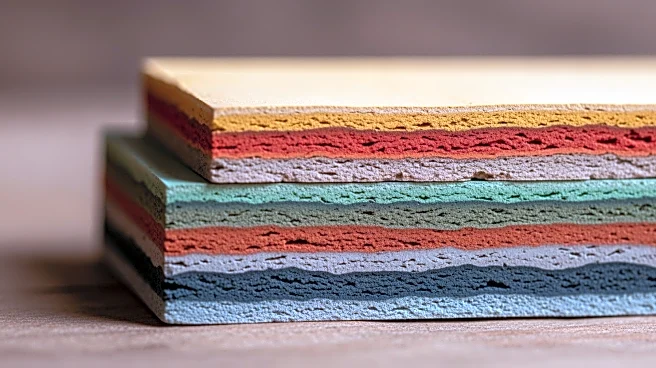
A comprehensive study has been conducted on the exterior paint layers of Abeline's farm, focusing on the pigments used from the 19th to 20th centuries. The research utilized various analytical techniques, including Raman microscopy, SEM-EDX, and micro-XRF,
to identify and date the different layers of paint. The study revealed the use of pigments such as chrome green, Prussian blue, and titanium white across different time periods. The analysis showed that the light green layer, dated to 1871, and the dark green layer, dated to 1894, were composed of complex pigment mixtures. The study also highlighted the presence of phthalocyanine pigments in later layers, indicating a shift in pigment use over time.
Why It's Important?
This study provides valuable insights into historical paint compositions and the evolution of pigment use over time. Understanding the materials and techniques used in historical architecture can inform conservation efforts and help preserve cultural heritage. The findings also contribute to the broader knowledge of pigment technology and its development, which is crucial for art historians, conservators, and scientists working in the field of cultural heritage preservation. The identification of specific pigments and their historical context can aid in the accurate restoration of historical sites, ensuring that they remain true to their original appearance.
What's Next?
The study's findings may lead to further research into the historical use of pigments and their impact on architectural conservation. Conservationists and historians might use this information to develop more effective preservation techniques for historical buildings. Additionally, the study could inspire similar analyses of other historical sites, contributing to a more comprehensive understanding of historical pigment use and its evolution. Future research could also explore the environmental and economic factors that influenced pigment choices in historical architecture.
Beyond the Headlines
The study highlights the complex interplay between art, science, and history in the field of cultural heritage preservation. It underscores the importance of interdisciplinary approaches in understanding and preserving historical artifacts. The research also raises questions about the sustainability and environmental impact of historical pigment production, which could inform modern practices in the art and conservation industries. By examining the historical context of pigment use, the study contributes to a deeper appreciation of the cultural and technological advancements of past societies.