



What's Happening?
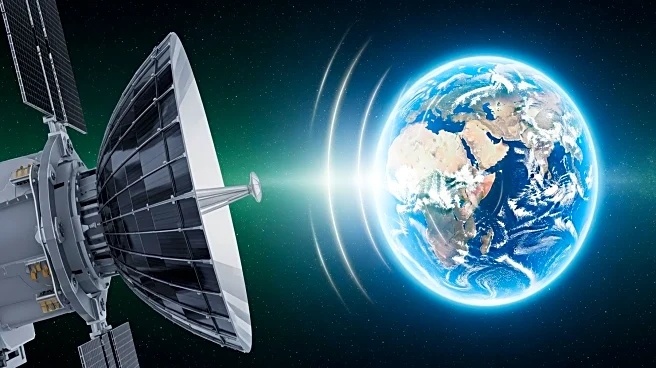
The Clouds and the Earth's Radiant Energy System (CERES) program, led by NASA's Langley Research Center, has been instrumental in understanding Earth's energy balance since its inception in the late 1980s. The program utilizes a series of instruments
aboard various satellites to measure the Earth's radiation budget, which is crucial for climate research. As of now, six CERES instruments are operational across different missions, including Terra, Aqua, and NOAA-20. Recent meetings have focused on the status of these instruments, data products, and scientific findings. Notably, the CERES team has been analyzing data to understand global temperature anomalies and the Earth's energy imbalance, which have shown significant variations in recent years. The program also collaborates with international partners to enhance data accuracy and coverage.
Why It's Important?
CERES data is vital for climate science as it helps quantify the Earth's energy budget, which is a key factor in understanding climate change. The program's findings on global temperature anomalies and energy imbalances provide critical insights into the effects of greenhouse gases and other climate drivers. This information is essential for developing accurate climate models and predicting future climate scenarios. The collaboration with international agencies like NOAA and the European Space Agency further strengthens the program's ability to provide comprehensive and reliable data. The insights gained from CERES are crucial for policymakers and scientists working on climate mitigation and adaptation strategies.
What's Next?
The CERES program plans to continue its research and data collection efforts, with upcoming meetings scheduled to discuss further advancements and findings. The team is also working on improving data algorithms and expanding collaborations with other satellite missions to enhance the accuracy and scope of their observations. Future efforts will focus on addressing the challenges posed by climate variability and improving the understanding of Earth's energy dynamics. These initiatives will support ongoing climate research and help inform global climate policy decisions.