





What's Happening?
Craig Litwin, a former Sebastopol City Council member and long-time advocate for gardening, is spearheading a new initiative called the Farming Club Coalition. This coalition aims to establish and support 'farming clubs' across communities, a model distinct
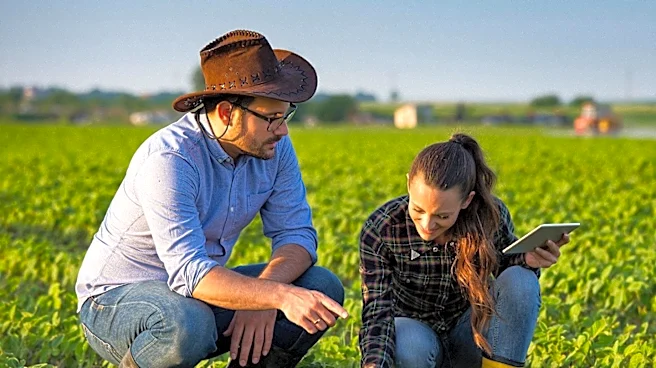
from traditional gardening clubs or Community Supported Agriculture (CSA). In a farming club, members collectively cultivate a plot of land, and the harvest is shared among them. A professional farmer is on hand to provide coaching and guidance. Litwin was inspired by Jason Bradford, a farmer from Corvallis, Oregon, who successfully implemented this model on his own farm. The coalition, fiscally sponsored by the Post Carbon Institute, held its first webinar in September, attracting participants from various locations, including New Zealand and France, interested in replicating the concept. Litwin envisions a monthly membership cost of approximately $50, providing members with sufficient vegetables for their needs throughout the year.
Why It's Important?
This initiative offers a novel approach to local food production and community engagement in the U.S. By fostering collective farming, it addresses several contemporary challenges, including food security, community building, and sustainable agriculture. The model provides an accessible way for individuals to obtain fresh, organic produce without the full-time commitment of farming or the financial outlay of a CSA. For farmers, it offers an alternative income stream by acting as a coach, supplementing their earnings while engaging with their community. The non-commercial nature of these clubs also avoids the complexities of selling produce, focusing instead on direct consumption by members. This could lead to a more resilient local food system, reducing reliance on large-scale commercial agriculture and strengthening community ties through shared labor and resources.
What's Next?
Craig Litwin is actively seeking suitable land in Sebastopol and West County to establish the first local farming club. He is looking for approximately one acre of land, ideally with sufficient water access, deer protection, and potentially garden boxes to mitigate gopher issues. The Farming Club Coalition plans to continue sharing information and supporting individuals and organizations interested in forming their own clubs. They are also hosting free webinars to educate potential participants and coaches on how to launch and manage a farming club. The success of these initial clubs could serve as a blueprint for wider adoption across the country, potentially leading to a network of community-supported, non-commercial farming operations.
Beyond the Headlines
The Farming Club model represents a deeper shift towards localized, participatory food systems, moving beyond mere consumption to active involvement in food production. It highlights a growing desire for connection to the source of food and a rejection of purely transactional relationships with agriculture. Ethically, it promotes a sense of shared responsibility and mutual aid within communities. Legally, the non-commercial aspect is crucial, as it distinguishes members from employees and avoids taxable events, simplifying the operational framework. Culturally, it revives traditional practices of communal farming and strengthens local economies by keeping food production and consumption within the community. This model could also serve as an educational platform, teaching practical farming skills and fostering environmental stewardship among participants.