



What's Happening?
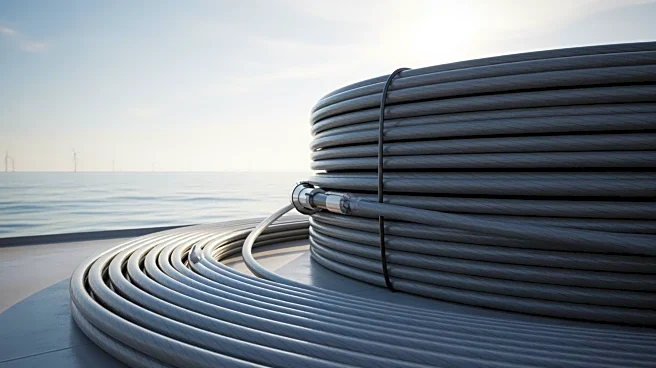
Belgian offshore contractor Jan De Nul has successfully completed the installation of three HVAC grid connection cables at TenneT's DolWin kappa platform. This project is part of a larger effort to transport nearly 660 MW of renewable electricity from
two offshore wind farms, Nordseecluster 1 and 2, to the German onshore grid. The cables, which span a total length of 37 km, were designed, produced, transported, installed, and protected by Jan De Nul and its partner, Hellenic Cables. The installation involved the use of specialized vessels, including the cable-laying vessel Isaac Newton and the multi-purpose vessel Adhémar de Saint-Venant, which buried the cables using a trencher. Additionally, the rock installation vessel Simon Stevin placed approximately 25,000 tonnes of rock berms to protect the cables on the seabed. The project is a significant step in the HVDC DolWin6 project, which aims to integrate renewable energy from the North Sea into Germany's power grid.
Why It's Important?
The completion of this cable installation is crucial for advancing Germany's renewable energy infrastructure. By facilitating the transport of renewable electricity from offshore wind farms to the mainland, the project supports Germany's transition to sustainable energy sources. The DolWin kappa platform and its associated projects are expected to provide enough energy to power over 1.1 million German households, significantly contributing to the country's energy needs. This development not only underscores the importance of offshore wind energy in reducing carbon emissions but also highlights the role of international collaboration in achieving energy goals. The successful execution of such projects can serve as a model for other countries looking to expand their renewable energy capabilities.
What's Next?
Following the completion of the cable installation, the next steps involve the final connection and testing of the cables, scheduled for 2026. This will coincide with the installation of two offshore substations for the Nordseecluster wind farms. These efforts are part of a broader strategy to enhance Germany's renewable energy infrastructure and integrate more offshore wind power into the national grid. As the project progresses, stakeholders will likely monitor its impact on energy supply and grid stability. The success of this initiative could influence future renewable energy projects and policies, both in Germany and internationally.