
What's Happening?
Recent advancements in microbiome research have significantly transformed the understanding of human health, highlighting the profound impact of microbes on various bodily functions. According to Tim Spector
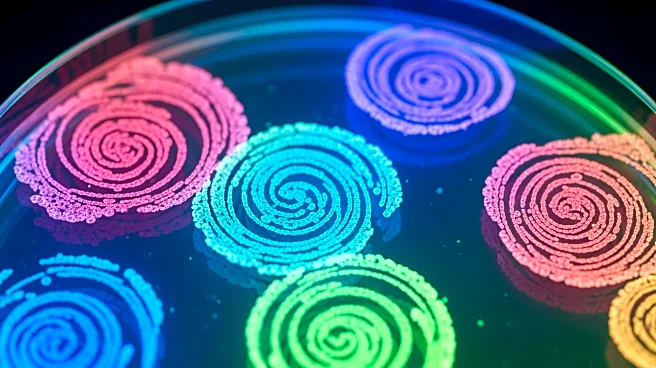
from King’s College London, the gut microbiome influences metabolism, immunity, and mental well-being. Historically, humans have used microbes for health benefits without fully understanding their mechanisms. The field gained momentum in the 2000s with advancements in genetic sequencing, revealing that each person has a unique microbial 'fingerprint'. This discovery has led to a deeper understanding of the microbiome's role in health, including its influence on drug efficacy and potential in treating conditions like Clostridium difficile infections and obesity. Researchers are now exploring how microbial diversity supports health and how it can be harnessed to treat conditions such as irritable bowel syndrome and depression.
Why It's Important?
The growing understanding of the microbiome's role in health has significant implications for medical research and treatment strategies. By recognizing the microbiome as an active participant in wellness, new therapeutic avenues are opening up for conditions previously thought unrelated to gut health. This shift could lead to more personalized medicine approaches, where treatments are tailored based on an individual's unique microbial composition. The potential to influence health outcomes through microbiome manipulation could revolutionize how diseases are diagnosed, prevented, and treated, offering hope for conditions like diabetes and Parkinson's disease. As research continues, the challenge will be to distinguish between overhyped products and those with genuine therapeutic potential.
What's Next?
Future research will likely focus on conducting rigorous clinical trials to validate the therapeutic potential of microbiome-based treatments. These trials will be crucial in determining the efficacy and safety of interventions aimed at modifying the microbiome to improve health outcomes. Additionally, there is a growing interest in understanding how to establish a healthy microbiome early in life, which could have long-lasting health benefits. As the field progresses, collaboration between researchers, healthcare providers, and policymakers will be essential to integrate microbiome science into mainstream medical practice effectively.
Beyond the Headlines
The implications of microbiome research extend beyond immediate health benefits, touching on ethical and regulatory considerations. As the potential for microbiome manipulation grows, questions about the regulation of microbiome-based therapies and the ethical implications of altering human microbiota will need to be addressed. Furthermore, the commercialization of microbiome products raises concerns about accessibility and equity in healthcare. Ensuring that advancements in microbiome science benefit a broad population will be a critical challenge for the future.