





What's Happening?
Cranston, Rhode Island's Garden City community has been nominated for inclusion on the National Register of Historic Places. This nomination is the culmination of over seven years of advocacy by the Garden City Alliance. A crucial neighborhood meeting
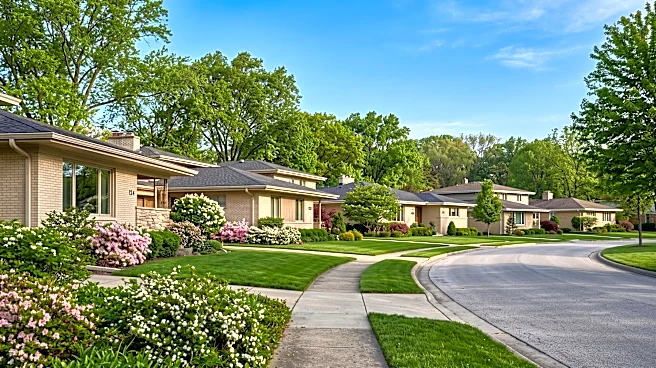
is scheduled for Thursday, November 12th, from 5:30 to 7 p.m. at the Garden City School cafeteria, serving as one of the final steps in the process. Garden City, with construction beginning in 1946, is recognized as one of the earliest planned communities in post-World War II America. It was designed as a 'City within a City,' featuring a 'Main Street' with essential services like a pharmacy, luncheonette, supermarket, and specialty shops, alongside a church and school. The community was intended to provide starter homes for returning servicemen, emphasizing family life with generous backyards and streets named after trees and flowers. The Garden City Shopping Center offered a variety of retail, service, and entertainment options, including a bowling alley and movie theater.
Why It's Important?
The potential inclusion of Garden City on the National Register of Historic Places carries significant cultural and economic implications. For the community, it provides official recognition of its historical and architectural significance, preserving its unique character and the legacy of post-WWII urban planning. This designation can unlock access to federal and state tax credits and grants for historic preservation, encouraging property owners to maintain and restore their homes and businesses in line with historical guidelines. Economically, it can boost heritage tourism, attracting visitors interested in the community's history and design, which in turn supports local businesses. Furthermore, the designation often leads to increased property values within the historic district, benefiting homeowners. It also fosters a stronger sense of community pride and identity, as residents become stewards of a nationally recognized historic site.
What's Next?
The upcoming neighborhood meeting on November 12th is a critical step in the nomination process, allowing community members to provide input and learn more about the implications of the historic designation. Following this meeting, the nomination will proceed through state and federal review processes, which typically involve evaluations by state historic preservation offices and the National Park Service. If approved, Garden City will officially be listed on the National Register of Historic Places. This designation will likely lead to increased awareness and interest in the community's unique history and architecture. Property owners within the designated area may then explore opportunities for historic preservation incentives, and local organizations might develop educational programs or tours to highlight Garden City's significance. The Garden City Alliance will likely continue its role in supporting the community and ensuring the preservation of its historic character.
Beyond the Headlines
The nomination of Garden City reflects a broader appreciation for mid-20th-century suburban planning and its role in American social history. The 'garden city movement,' influenced by Ebenezer Howard, aimed to create self-contained communities balancing urban and rural elements. Garden City's design, with its winding streets and neatly set-back homes, aligns with Federal Housing Administration (FHA) directives of the era, showcasing how federal policies shaped suburban development. This designation could inspire other post-WWII planned communities to seek similar recognition, fostering a re-evaluation of these often-overlooked architectural and social landscapes. It also highlights the evolving definition of 'historic,' moving beyond older, pre-industrial structures to include more recent, yet equally significant, periods of American development. The preservation of such communities helps us understand the aspirations and societal shifts that followed major historical events like World War II.