

What's Happening?
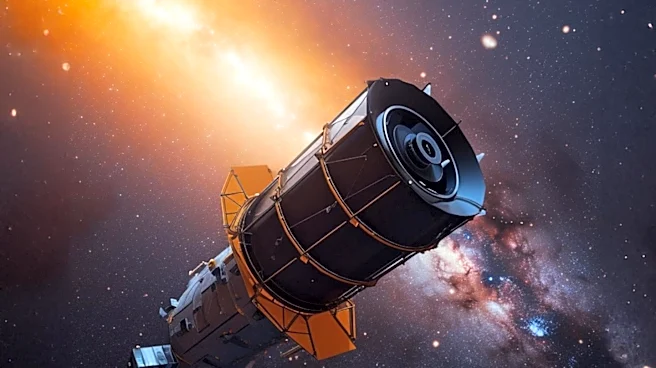
NASA's Nancy Grace Roman Space Telescope is poised to significantly expand the scope of cosmic observations, imaging over 50 times more sky than the Hubble Space Telescope has in its 30-year history. The Roman Telescope, scheduled for launch in 2026,
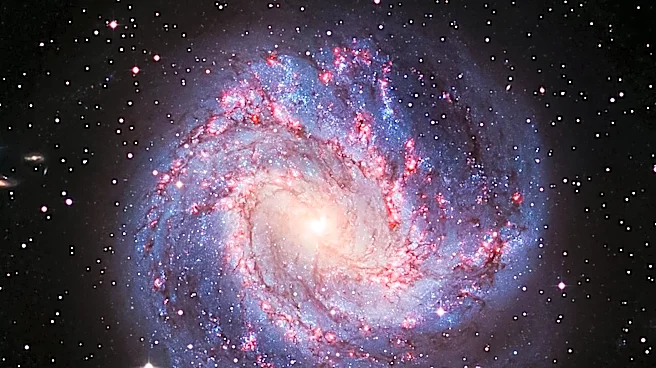
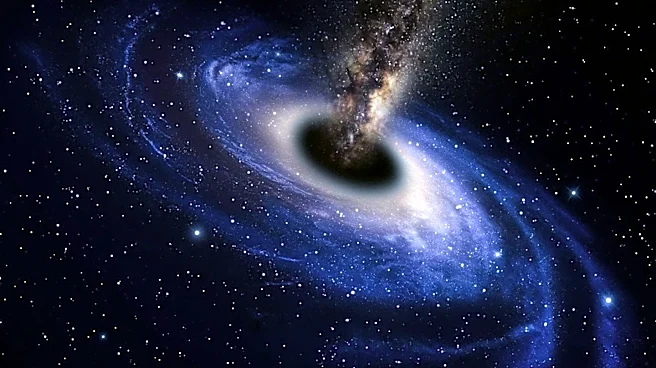
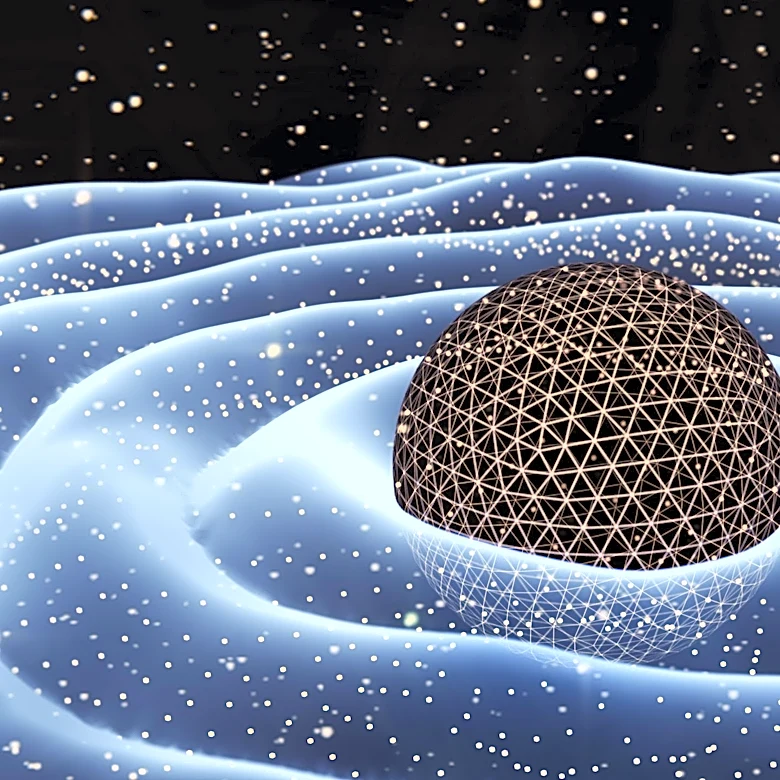
aims to address fundamental questions about dark energy and dark matter by capturing images of millions of galaxies, billions of stars, and thousands of supernovae. This ambitious project is expected to provide unprecedented insights into the universe's expansion and structure formation, as explained by Jeremy Perkins, a scientist at NASA's Goddard Space Flight Center.
Why It's Important?
The Roman Space Telescope represents a major leap forward in astronomical research, potentially transforming our understanding of the universe. By imaging vast areas of the sky, it will help scientists explore the mysteries of dark energy and dark matter, which are crucial to understanding the universe's expansion and structure. This could lead to breakthroughs in cosmology and astrophysics, impacting scientific theories and models. The telescope's capabilities will also enhance the search for exoplanets, contributing to the broader field of space exploration and potentially influencing future space missions and technologies.
What's Next?
As the launch date approaches, NASA will continue to prepare the Roman Space Telescope for its mission. Once operational, the telescope will begin its five-year observation period, during which it will collect data that could redefine our understanding of the cosmos. The scientific community eagerly anticipates the findings, which could prompt new research directions and collaborations. Additionally, the data collected may influence future space policy and funding decisions, as well as inspire public interest and educational initiatives in space science.