




What's Happening?
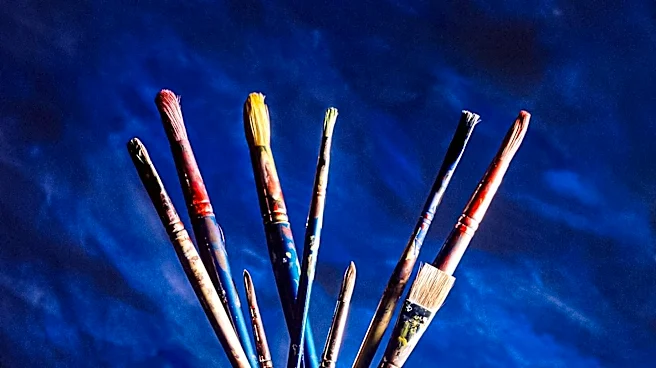
Isaac Butler's new book, 'The Perfect Moment,' explores the history of the National Endowment for the Arts (NEA) and its role in America's culture wars. The book examines how the NEA became a battleground for political and cultural conflicts, particularly
during the rise of the religious right and the AIDS crisis. Butler highlights key moments, such as the controversy over Robert Mapplethorpe's retrospective, which sparked debates about public funding for the arts. The book also discusses the impact of recent budget cuts and the potential future of the NEA under the Trump administration.
Why It's Important?
The NEA's history is a reflection of broader cultural and political tensions in the United States. As a major funder of the arts, the NEA has been at the center of debates about free expression, censorship, and the role of government in supporting the arts. The book's exploration of these issues is timely, given ongoing discussions about arts funding and the influence of private donors. Understanding the NEA's past can inform current and future efforts to support the arts and ensure diverse voices are represented. The potential dismantling of the NEA could have significant implications for artists and cultural institutions across the country.
What's Next?
The future of the NEA remains uncertain, with potential budget cuts threatening its existence. Artists and cultural organizations may need to seek alternative funding sources, such as private donations or state-level support. The ongoing debate about the NEA's role highlights the need for advocacy and public engagement to ensure the arts remain accessible and diverse. As the political landscape evolves, the arts community must navigate these challenges and continue to advocate for the importance of public funding in supporting cultural expression.
Beyond the Headlines
The NEA's struggles reflect broader societal issues, such as the tension between free expression and censorship, and the impact of political ideologies on cultural institutions. The book also raises questions about the role of art in society and how it can challenge or reinforce cultural norms. As the arts community grapples with these issues, there is an opportunity to reimagine the relationship between art, politics, and society, and to advocate for a more inclusive and equitable cultural landscape.