


What's Happening?
ENTRA1 Energy has announced a strategic partnership with Sargent & Lundy to provide engineering and design support for the deployment of ENTRA1 Energy Plants, which will utilize NuScale Power's small modular reactor (SMR) technology. Sargent & Lundy,
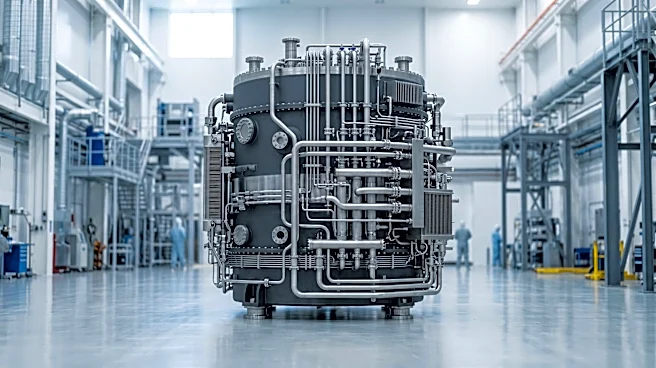
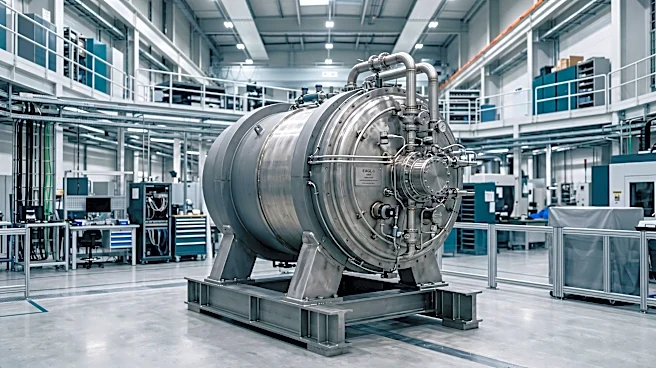
a Chicago-based firm with extensive experience in nuclear engineering, will contribute its expertise to the development and execution of these plants. ENTRA1 Energy holds exclusive global rights for the commercialization, distribution, and deployment of NuScale's products and services, acting as a central hub for the financing, development, and management of these SMR plants. The NuScale Power Module is a pressurized water reactor generating 77 MWe, and it was the first SMR design to receive approval from the U.S. Nuclear Regulatory Commission in September 2020. NuScale offers these units in various configurations, including VOYGR plants that can house up to 12 modules, generating 924 MWe. This partnership follows a previous memorandum of understanding between Sargent & Lundy and NuScale Power in May 2019, where Sargent & Lundy became an investor and supported the standard plant design.
Why It's Important?
This collaboration is significant for the advancement of nuclear energy infrastructure in the United States, particularly in the southeastern region. The partnership aims to address the growing demand for reliable power by deploying up to 6 GW of NuScale SMR capacity across the Tennessee Valley Authority's (TVA) seven-state service region. This substantial deployment could power approximately 4.5 million homes or 60 new data centers, indicating a major step towards energy security and decarbonization. The involvement of Sargent & Lundy, with its decades of nuclear engineering experience, lends credibility and technical strength to ENTRA1 Energy's ambitious plans. The deployment of SMRs represents a shift towards more flexible and scalable nuclear power solutions, which can be integrated into existing grids more easily than traditional large-scale nuclear plants. This initiative could also stimulate economic growth through job creation in engineering, construction, and operations within the nuclear sector.
What's Next?
The immediate next steps involve Sargent & Lundy providing engineering and design support to advance ENTRA1 Energy's development plans and project execution. This will entail detailed planning for the construction and integration of the NuScale SMRs into the TVA's grid. Regulatory processes, including further approvals from the U.S. Nuclear Regulatory Commission and state-level authorities, will be crucial for the progression of these projects. Stakeholders such as local communities, environmental groups, and energy consumers will likely monitor the development closely, influencing public perception and potential future expansions. The success of these initial deployments could pave the way for broader adoption of NuScale SMR technology across other regions of the U.S. and globally, as ENTRA1 Energy holds exclusive worldwide commercialization rights. Further announcements regarding specific site selections and construction timelines are anticipated as the partnership progresses.
Beyond the Headlines
This partnership underscores a broader trend in the energy sector towards modular and advanced nuclear technologies as a solution for climate change and energy independence. The deployment of SMRs, particularly those with U.S. regulatory approval, could establish a new standard for nuclear power plant construction and operation, potentially reducing construction times and costs compared to traditional reactors. Ethically, the focus on cleaner energy sources aligns with global efforts to reduce carbon emissions, but it also brings renewed discussions about nuclear waste management and safety protocols, even with the enhanced safety features of SMRs. Legally, the regulatory framework for SMRs is still evolving, and successful deployment will help refine these guidelines for future projects. Culturally, a successful rollout could shift public perception of nuclear energy, moving it from a controversial power source to a more accepted and integral part of the national energy mix, especially as the technology proves its reliability and safety in real-world applications.