


What's Happening?
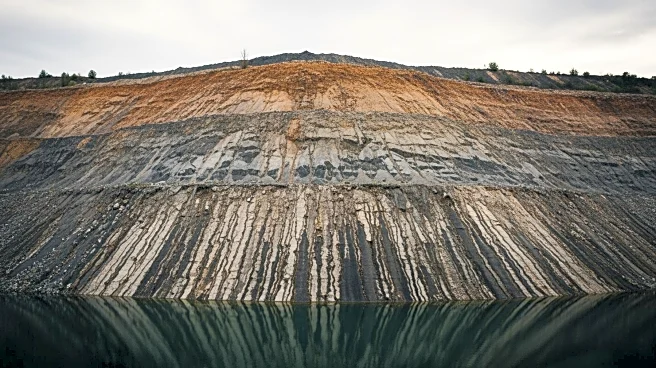
The mining industry is grappling with the environmental challenges posed by tailings management. Tailings, a byproduct of mining, consist of a slurry of crushed rock, residual chemicals, and heavy metals. These are typically stored in tailings storage
facilities (TSFs), which are prone to failure due to their construction methods. The upstream method, commonly used for building these dams, has a high failure rate, leading to catastrophic environmental consequences. Recent failures in Indonesia, Bolivia, and Zambia highlight the risks associated with inadequate tailings management. Climate change exacerbates these risks by increasing rainfall and altering weather patterns, which can compromise the structural integrity of TSFs. Despite advancements in technology and industry standards, significant gaps remain in global governance and enforcement, leaving many facilities at risk.
Why It's Important?
The management of tailings is crucial for environmental protection and public safety. Failures of tailings dams can lead to the release of toxic materials into waterways, affecting ecosystems and human communities. The Brumadinho disaster in Brazil, which resulted in significant loss of life and environmental damage, underscores the potential consequences of inadequate tailings management. As mining activities increase, so does the volume of tailings, necessitating improved management practices. The industry's response, including the Global Industry Standard on Tailings Management, aims to address these challenges, but implementation is uneven. The lack of binding global standards and enforcement mechanisms means that many facilities remain vulnerable, posing ongoing risks to the environment and communities.
What's Next?
The future of tailings management will likely involve increased regulatory oversight and technological innovation. The establishment of the Global Tailings Management Institute and advancements in monitoring technologies, such as satellite and AI-driven systems, are steps toward improving safety. However, achieving comprehensive global standards will require international cooperation and binding agreements. The industry must also address the governance gap by extending standards to smaller operators and state-owned enterprises. As climate change continues to impact weather patterns, the need for robust and adaptive tailings management strategies will become increasingly urgent.