




What's Happening?
A growing coalition is advocating for the inclusion of the 'Fix Our Forest Act' in the National Defense Authorization Act (NDAA), arguing that wildfires constitute a national security issue. Tyson Bertone-Riggs, Managing Director for the Alliance for Wildfire
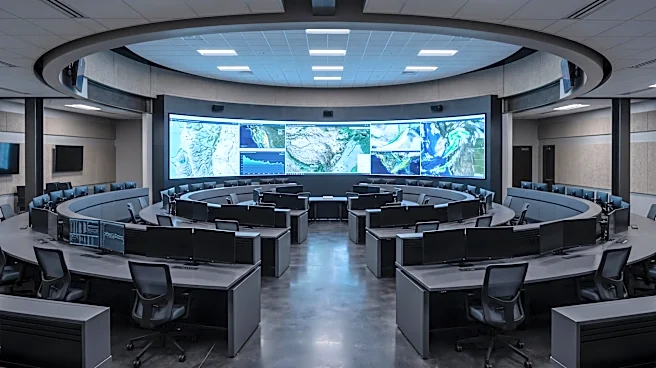
Resilience, highlights that wildfires frequently impact military readiness and occur on military bases. National Guard and reservists have been mobilized for wildfire response in 23 of the last 25 seasons, with Air Force Reserve and National Guard also utilized through the C-130 MAFFs program. The proposed bill aims to streamline planning and permitting, reduce litigation on federal projects to mitigate wildfire risk, and establish a community risk reduction program. A key provision is the creation of a wildfire intelligence center, envisioned as a fusion center for federal agencies to coordinate mapping, modeling, and predictive services for risk reduction, response, and post-fire recovery, accessible to state, local, and tribal governments. This centralization seeks to overcome the current fragmentation of functions and budgets across multiple agencies, which poses significant challenges.
Why It's Important?
Elevating wildfires to a national security concern within the NDAA signifies a critical shift in how the U.S. government might approach this escalating crisis. The current system, characterized by scattered functions and budgets across various agencies, leads to inefficiencies and hinders effective command and control. By integrating wildfire management into a defense bill, it could unlock substantial federal resources and foster a more unified, national response. This approach acknowledges the widespread impact of wildfires, which extend beyond local land management problems to affect military operations, public health through smoke, and significant property loss. The proposed intelligence center would provide a holistic picture of investment needs and outcomes, moving away from a 'scattershot approach' and potentially normalizing levels of investment and preparedness across different jurisdictions. Furthermore, addressing the unsustainable model of the wildland fire workforce, including low pay and demanding conditions, is crucial for retention and building a more professional, year-round force capable of mitigation, response, and recovery.
What's Next?
The immediate next step involves congressional consideration of the 'Fix Our Forest Act' for inclusion in the NDAA. If passed, the bill would lead to the establishment of a wildfire intelligence center, requiring federal agencies to coordinate and potentially centralize functions related to wildfire data and services. This would also necessitate the development of data standards across federal, state, and local entities. Furthermore, the bill's provisions for community risk reduction programs and streamlined planning would likely prompt new federal initiatives and funding opportunities for local communities. The long-term implications include a potential redesign of the wildland fire workforce, moving towards a more professionalized, better-compensated, and year-round force, encompassing mitigation and post-fire recovery roles, not just response. Stakeholders, including federal agencies, state and local governments, and civil society groups, will need to adapt to these new structures and coordination mechanisms.
Beyond the Headlines
The reclassification of wildfires as a national security threat reflects a deeper understanding of their systemic impact, moving beyond localized environmental concerns. This shift acknowledges the interconnectedness of environmental stability with national defense and societal well-being. Ethically, it raises questions about resource allocation and whether defense budgets should increasingly encompass climate-related disasters. Legally, integrating such provisions into the NDAA could set a precedent for how other climate-induced challenges are addressed at a federal level, potentially leading to more comprehensive and coordinated national strategies. Culturally, it could foster a greater sense of urgency and collective responsibility towards wildfire prevention and management, moving away from viewing it solely as a regional problem. The emphasis on a unified intelligence center also highlights the growing recognition of data-driven approaches and inter-agency collaboration as essential tools for tackling complex, large-scale crises in the long term.