







What's Happening?
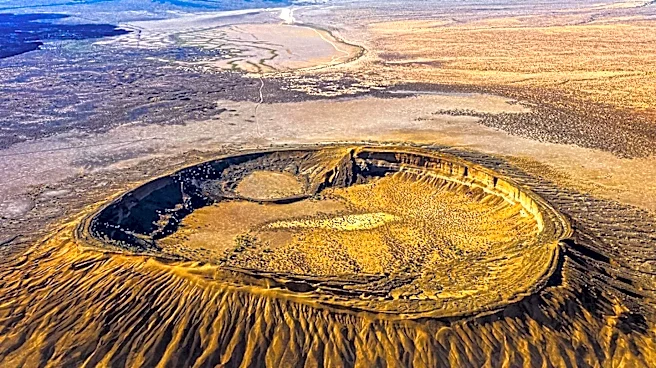
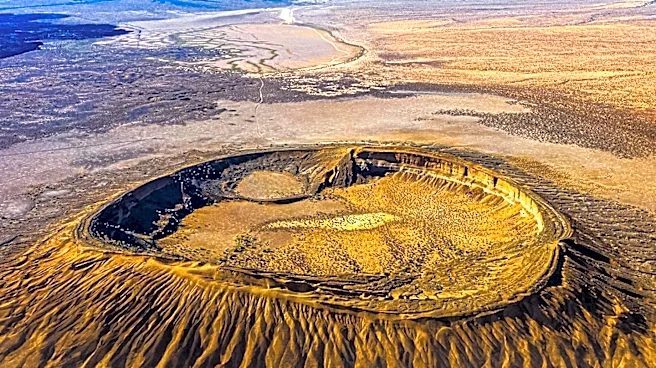
A 15-mile-wide pit discovered on Google Maps by an amateur astronomer in Quebec has been confirmed as a 390 million-year-old meteor impact crater. The discovery was made by Joël Lapointe, who noticed the unusual formation while planning a camping trip.
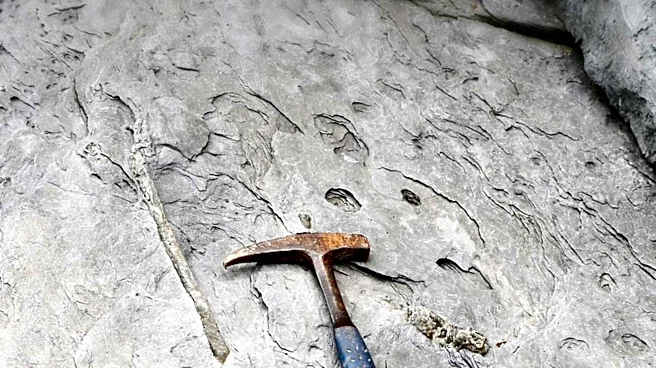
Geophysicist Pierre Rochette and a team of scientists conducted field studies, finding evidence of shock metamorphism and shatter cones, which are indicative of meteor impacts. The crater, named Uhaachatik Crater, is one of the largest confirmed in Canada and adds to the understanding of Earth's geological history.
Why It's Important?
The confirmation of the Uhaachatik Crater provides valuable insights into the history of meteor impacts on Earth, which have played a significant role in shaping the planet's geology and potentially influencing biological evolution. Such discoveries can inform models of planetary formation and the frequency of large impacts. The crater's identification also highlights the potential for citizen science and the use of modern technology, like satellite imagery, in making significant scientific discoveries.
What's Next?
Further analysis of the crater's samples will continue to provide data on the impact's effects on the local geology and environment. The findings will be presented at the Annual Meeting of the Meteorological Society in Germany, contributing to the broader scientific understanding of impact craters. The discovery may also inspire additional searches for similar formations using satellite imagery, potentially leading to more discoveries.