




What's Happening?
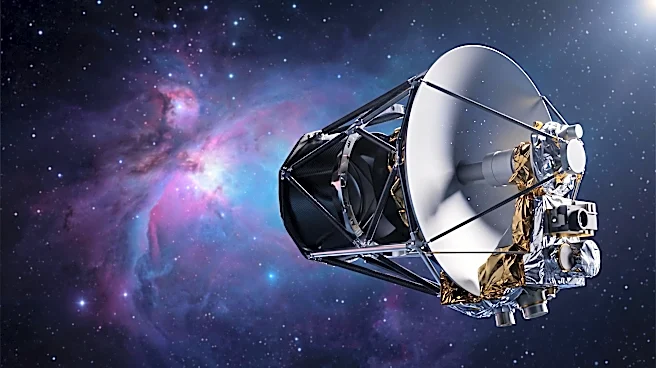
NASA has selected the PRobe far-Infrared Mission for Astrophysics (PRIMA) to advance to Phase B of its development, a stage focused on preliminary design and technology development. This mission, co-developed by University of Maryland (UMD) astronomers,
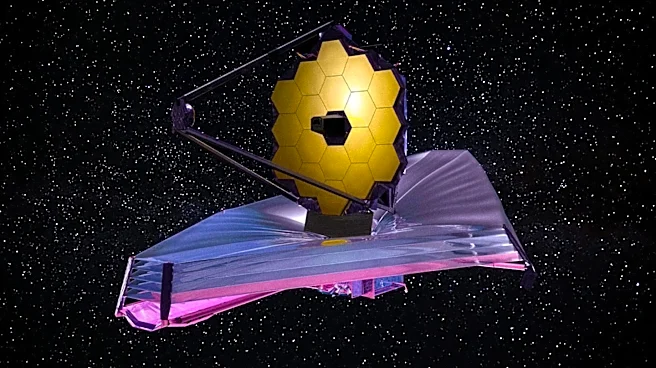
aims to measure far-infrared radiation with unprecedented sensitivity. PRIMA is designed to bridge the observational gap between existing infrared observatories, such as the James Webb Space Telescope, and radio telescopes. The mission, managed by the NASA Jet Propulsion Laboratory (JPL) with contributions from NASA's Goddard Space Flight Center, NASA’s Marshall Space Flight Center, and international partners, is projected to launch in 2033 for a five-year duration. UMD Astronomy Professor Alberto Bolatto is a co-investigator leading research on galaxy evolution, while UMD Astronomy Professor Sylvain Veilleux is a science working group lead for research on active galactic nuclei. The project cost is capped at $1.2 billion, excluding launch and other non-project expenses, and is subject to a confirmation review before proceeding to implementation.
Why It's Important?
The PRIMA mission represents a significant leap forward in astrophysics, offering capabilities that are orders of magnitude more sensitive than previous far-infrared observatories like the Herschel Space Observatory. This enhanced sensitivity will allow scientists to peer through cosmic gas and dust, enabling discoveries in planet formation, black hole and galaxy evolution, and the origins of cosmic dust. The ability to observe in far-infrared wavelengths will provide a clearer picture of the universe, even when objects are obscured by cosmic matter. This mission will complement existing telescopes, filling a crucial gap in astronomical observation and potentially leading to unforeseen discoveries. The involvement of UMD astronomers highlights the critical role of academic institutions in advancing space science and technology, fostering innovation, and training the next generation of researchers. The data collected by PRIMA could also shed light on fundamental questions, such as the origin of water on Earth, and contribute to a more comprehensive understanding of the universe's elemental composition.
What's Next?
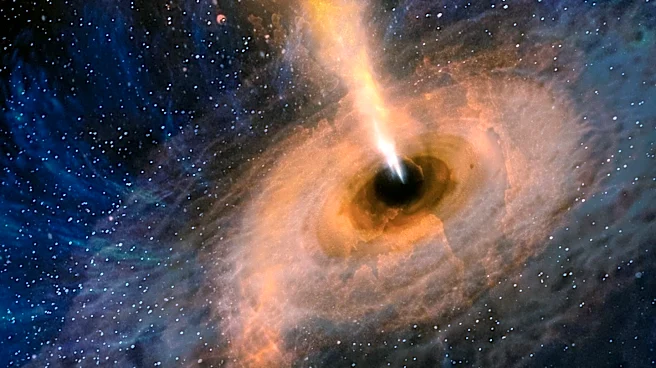
PRIMA is currently in Phase B, focusing on advancing its preliminary design and technology. The mission will undergo a confirmation review to assess its technical, programmatic, and cost performance before it can proceed to Phase C for implementation. If confirmed, the observatory is targeted for a 2033 launch. Researchers anticipate that 75% of PRIMA’s observation time will be available to outside scientists, suggesting a high level of competition for telescope time, similar to that for the James Webb Space Telescope. The mission's scientific endeavors will focus on three primary research areas: the origins of planets and their atmospheres, testing theories of galaxy evolution by surveying black holes and star-forming galaxies, and researching the origins of cosmic dust. The technological advancements, including a telescope reaching extremely cold temperatures and state-of-the-art detectors, will be further developed and refined in the coming years.
Beyond the Headlines
The development of PRIMA underscores a broader trend in space exploration towards specialized observatories designed to address specific gaps in our understanding of the cosmos. By focusing on far-infrared radiation, PRIMA will unlock a hidden universe, revealing processes that are invisible to other telescopes. This mission could fundamentally alter our understanding of how planets form, how galaxies evolve, and the life cycle of cosmic dust, which is essential for the formation of stars and planets. The collaborative nature of the project, involving multiple NASA centers and international partners, exemplifies the global effort required for such ambitious scientific undertakings. Furthermore, the emphasis on making observation time available to the broader scientific community ensures that the mission's impact will extend beyond the immediate research team, fostering widespread scientific engagement and potentially leading to unexpected breakthroughs that were not initially conceived by the mission's designers.