
What's Happening?
Foreclosure filings in the U.S. increased by over 20% in November compared to the previous year, marking the ninth consecutive month of year-over-year hikes. According to data from ATTOM, Delaware experienced
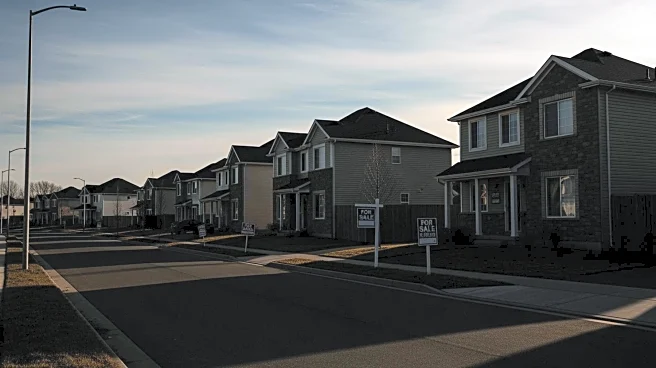
the highest rate of foreclosures, with one in every 1,924 homes affected. Other states with high foreclosure rates include South Carolina, Nevada, New Jersey, and Florida. The rise in foreclosures is attributed to high borrowing rates, dwindling savings, and an ongoing affordability crisis, which are pushing more families towards default. The increase in bank-owned properties is also negatively impacting neighborhood property values.
Why It's Important?
The surge in foreclosures highlights the ongoing challenges faced by American homeowners amid economic pressures. The affordability crisis, coupled with high interest rates and financial instability, is exacerbating the risk of default for many families. The impact of foreclosures extends beyond individual homeowners, affecting entire communities by lowering property values and creating economic uncertainty. This trend raises concerns about the broader economic implications, reminiscent of the 2008 housing crisis, and underscores the need for policy interventions to address housing affordability and financial stability.
What's Next?
As foreclosure rates continue to rise, policymakers and industry stakeholders will need to explore solutions to mitigate the impact on homeowners and communities. Potential measures could include financial assistance programs, regulatory changes to improve housing affordability, and efforts to stabilize interest rates. The ongoing economic challenges will require coordinated efforts from government agencies, financial institutions, and community organizations to support affected families and prevent further deterioration of the housing market.