
What's Happening?
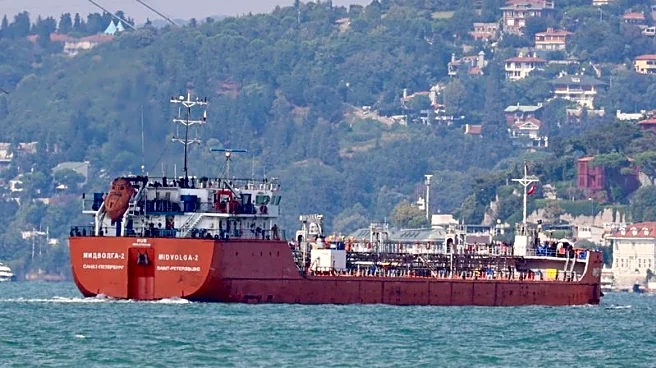
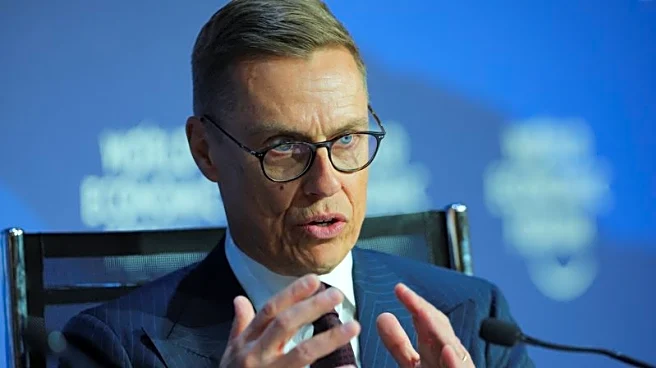
Sweden's Foreign Minister, Maria Malmer Stenergard, has urged the European Union to implement a comprehensive ban on European companies providing services to Russian ships involved in transporting oil, gas, and coal. This call was made during an annual
security conference in Salen, Sweden. The proposed sanctions are part of the EU's 20th sanctions package aimed at penalizing Russia for its ongoing conflict in Ukraine. The EU has previously targeted Russia's oil and gas sector, a major revenue source for the Kremlin. Stenergard emphasized the need to increase pressure on Russia by prohibiting transport, reloading of goods, insurance, and port repairs for Russian vessels. Additionally, she advocated for sanctions on Russian fertilizer exports, which constitute a significant portion of Russia's trade with the EU, and a halt to luxury goods exports from the EU to Russia.
Why It's Important?
The proposed sanctions reflect the EU's continued efforts to economically isolate Russia in response to its actions in Ukraine. By targeting the oil and gas shipping fleet, the EU aims to disrupt a critical component of Russia's economy. The inclusion of fertilizer and luxury goods in the sanctions package highlights the EU's strategy to broaden the economic impact on Russia. These measures could significantly affect Russian industries reliant on European services and goods, potentially leading to economic strain. For the EU, these sanctions represent a commitment to supporting Ukraine and maintaining pressure on Russia, while also navigating the economic implications for European businesses involved in these sectors.
What's Next?
The EU is expected to finalize and implement its 20th sanctions package, which will likely include the measures proposed by Sweden. The effectiveness of these sanctions will depend on the EU's ability to enforce them and the response from Russia. European companies involved in the affected sectors may need to adjust their operations to comply with the new regulations. Additionally, the EU will need to monitor the impact of these sanctions on its own economy, particularly in sectors like agriculture that rely on Russian fertilizers. The international community will be watching closely to see how these sanctions influence the geopolitical landscape and Russia's actions in Ukraine.