


What's Happening?
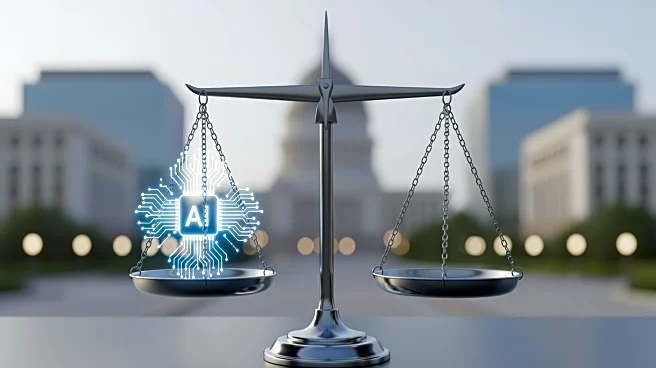
President Donald Trump has announced plans to implement a 'one-rule' regulatory model for artificial intelligence (AI), which could override existing state regulations, including those in California. This move is intended to streamline compliance for companies
by eliminating the need to adhere to multiple state-specific laws. The proposal follows a leaked draft document that highlighted the complexity created by over 1,000 pieces of state legislation. California, under Governor Gavin Newsom, has been proactive in establishing AI regulations, such as Senate Bill 53, which mandates safety disclosures and whistleblower protections for AI companies. Other California laws include Assembly Bill 489, which governs AI in health advice, and SB 243, which regulates chatbots interacting with minors. The proposed federal regulation could lead to legal challenges, as it may conflict with California's existing laws.
Why It's Important?
The proposed 'one-rule' AI regulation by President Trump could significantly impact the regulatory landscape for AI in the United States. By centralizing AI regulation, the federal government aims to reduce the regulatory burden on companies, potentially fostering innovation and growth in the AI sector. However, this approach may undermine state-specific regulations designed to address local concerns and protect residents. California, a leader in AI regulation, could face challenges in enforcing its laws, which may lead to legal battles over state versus federal authority. The outcome of this regulatory shift could influence how AI technologies are developed and deployed across the country, affecting industries reliant on AI advancements.
What's Next?
If President Trump proceeds with the 'one-rule' AI regulation, it is likely to spark legal challenges from states like California that have established their own AI laws. These states may argue that federal overreach infringes on their rights to regulate industries within their borders. The legal battles could delay the implementation of the federal regulation and create uncertainty for companies operating in the AI space. Additionally, stakeholders, including industry leaders and civil rights groups, may lobby for or against the proposed regulation, influencing its final form. The resolution of these conflicts will shape the future of AI regulation in the U.S.