
What's Happening?
Kwanzaa, a weeklong celebration from December 26 to January 1, is observed by African American communities across the United States. Established in 1966 by Maulana Karenga, the holiday aims to reconnect
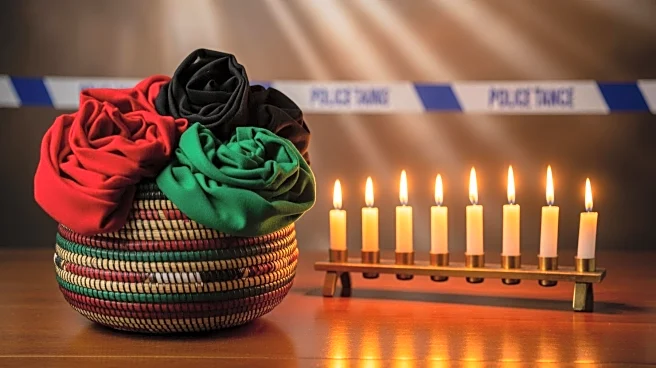
African Americans with their ancestral roots and cultural traditions. Kwanzaa is guided by seven principles known as the Nguzo Saba, which include Unity, Self-Determination, Collective Work and Responsibility, Cooperative Economics, Purpose, Creativity, and Faith. Each day of the celebration focuses on one of these principles, symbolized by the lighting of candles on a kinara. The holiday is celebrated through large city-sponsored events and smaller community gatherings, featuring storytelling, music, dance, and the sharing of African American and Pan African foods.
Why It's Important?
Kwanzaa plays a significant role in reinforcing cultural identity and unity among African Americans. It serves as a reminder of the struggles and achievements of the Black Freedom Movement of the 1960s, promoting values of self-determination and community responsibility. The holiday also provides an opportunity for African Americans to celebrate their heritage and educate younger generations about their cultural history. By fostering a sense of community and cultural pride, Kwanzaa contributes to the broader discourse on racial equality and social justice in the United States.