


What's Happening?
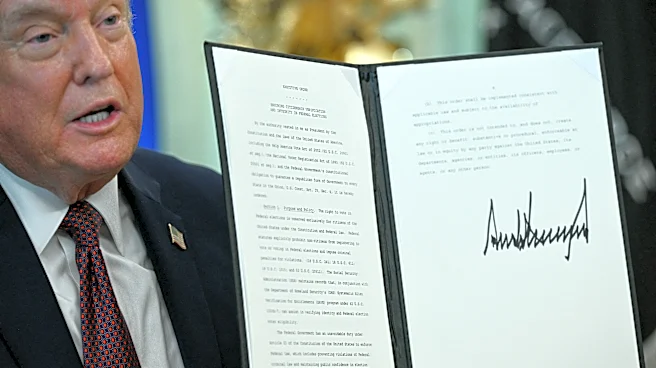
Tennessee lawmakers are advocating for the national adoption of election integrity measures similar to those already in place in their state, specifically referencing the Safeguarding American Voter Eligibility (SAVE) America Act. State Representative
Jason Zachary, a guest columnist, highlights that Tennessee already requires proof of citizenship for voter registration and a photo ID to cast a ballot. He asserts that these measures ensure election integrity and voter confidence, allowing Tennesseans to trust that their votes count and that elections are decided by eligible voters. Zachary criticizes what he perceives as a failure by many Democratic-led states to implement similar safeguards, citing instances of non-citizens on voter rolls in other states as evidence of lax laws. He argues that these requirements are not radical but rather a baseline for any serious election system, emphasizing that public opinion polls show strong support for government-issued ID at the polls, even among Democrats.
Why It's Important?
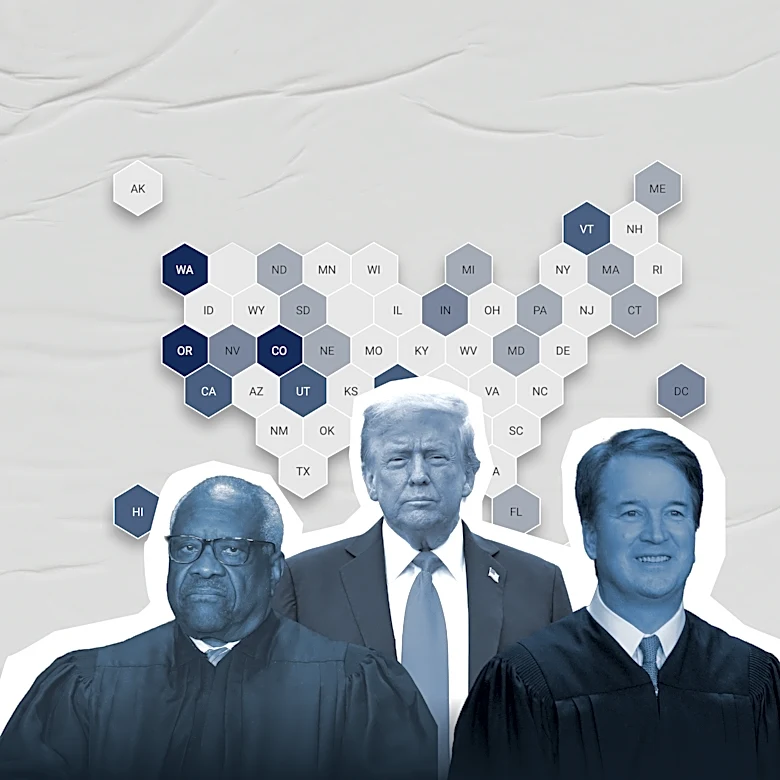
The call from Tennessee lawmakers to nationalize their state's election laws underscores a significant ideological divide in the U.S. regarding voting rights and election security. If the SAVE America Act were to pass with its proposed requirements for proof of citizenship and nationwide photo ID, it would fundamentally reshape the electoral landscape across the country. Proponents, like Representative Zachary, believe such measures are crucial for preventing voter fraud and enhancing public trust in election outcomes. They argue that states without these safeguards are vulnerable to ineligible voters influencing elections. Conversely, opponents view these requirements as potential barriers to voting, disproportionately affecting marginalized communities, and leading to voter suppression. The debate highlights the tension between ensuring secure elections and maximizing voter participation, with each side presenting compelling arguments about the potential impact on democratic processes and the fairness of elections. The outcome of this national discussion could influence future voter turnout, demographic representation, and the overall perception of electoral legitimacy.
What's Next?
As the November election approaches, the debate over the SAVE America Act and similar election integrity measures is expected to intensify. Congressional Republicans are actively working to pass key portions of the SAVE America Act, potentially through the budget reconciliation process, to bypass Democratic opposition in the Senate. However, the legislative path remains challenging, with significant procedural hurdles and strong resistance from Democratic lawmakers who view the bill as an attempt at voter suppression. While Tennessee has already implemented these measures and continues to strengthen its own election safeguards, other states will likely continue to grapple with varying approaches to voter ID and citizenship verification. The ongoing discussion will likely involve continued advocacy from states like Tennessee, legislative efforts in Congress, and potential legal challenges from voting rights groups. The ultimate fate of a national voter ID and citizenship verification law will depend on political will, legislative strategy, and the ability to overcome partisan gridlock.
Beyond the Headlines
The advocacy for nationalizing Tennessee's election laws reflects a broader trend of states serving as laboratories for policy innovation, particularly in areas where federal consensus is elusive. The success and perceived integrity of Tennessee's election system, as highlighted by Representative Zachary, could serve as a model or a point of contention in the national debate. This discussion also touches upon the evolving role of states in shaping federal policy, especially when partisan control of Congress is divided. Furthermore, the emphasis on 'voter confidence' and 'election integrity' often masks deeper philosophical disagreements about the nature of democracy itself – whether it should prioritize ease of access for all eligible citizens or stringent controls to prevent any potential for fraud. The long-term implications could include a patchwork of state-level election laws, continued legal battles over voting rights, and a persistent national conversation about the balance between security and access in a democratic system.