





What's Happening?
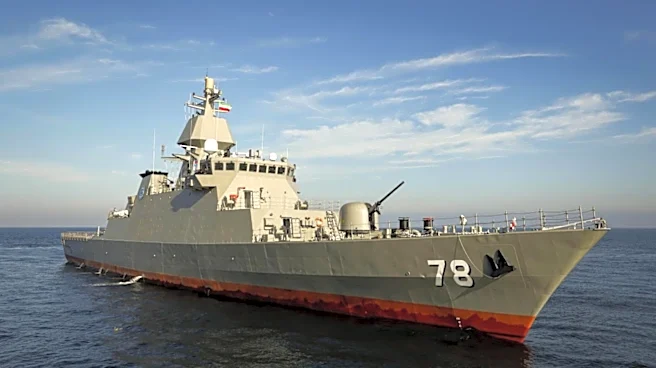
At least eight ships controlled by Japan's Mitsui OSK Lines Ltd. are navigating out of the Strait of Hormuz using a route close to Iran. This includes some of the last oil tankers trapped in the waterway. The convoy consists of five supertankers, two
chemical tankers, and a car carrier. These vessels are moving in a convoy after some previous attempts to exit were abandoned. Iran has been asserting control over the Strait of Hormuz, a critical passage for global oil transport, following an interim peace deal with the U.S. last month. Over the weekend, several tankers abandoned efforts to cross Hormuz using a U.S.-managed route by the coast of Oman, opting instead for a route closer to Iran. Iran has stated that only ships with its permission can cross. If successful, this crossing would significantly reduce the number of large oil tankers trapped in the Persian Gulf since the start of the conflict.
Why It's Important?
The movement of these ships is significant as it highlights the ongoing geopolitical tensions in the region and the strategic importance of the Strait of Hormuz. The strait is a vital chokepoint through which a fifth of the world's oil supply is transported. The ability of these ships to navigate through Hormuz underlines the impact of the recent peace deal between Iran and the U.S., which has led to a surge in oil supply and a subsequent drop in prices. This development is crucial for global oil markets, as it could lead to a glut and further price fluctuations. Additionally, Japan's involvement underscores the country's reliance on Middle Eastern oil and its diplomatic efforts to ensure safe passage for its vessels.
What's Next?
The successful navigation of these ships could encourage other trapped vessels to attempt similar routes, potentially easing the backlog in the Persian Gulf. However, the situation remains delicate, as Iran's control over the strait could lead to further diplomatic negotiations or tensions. Japan is likely to continue its diplomatic efforts to ensure the safety of its vessels, possibly seeking further assurances from Iran. The global oil market will be closely monitoring these developments, as any disruptions in the strait could have significant implications for oil prices and supply chains worldwide.