

What's Happening?
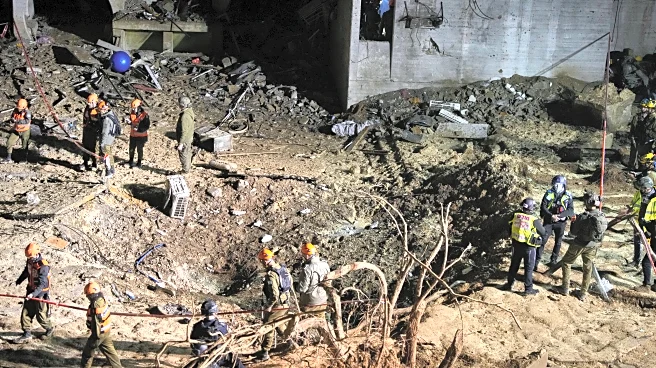
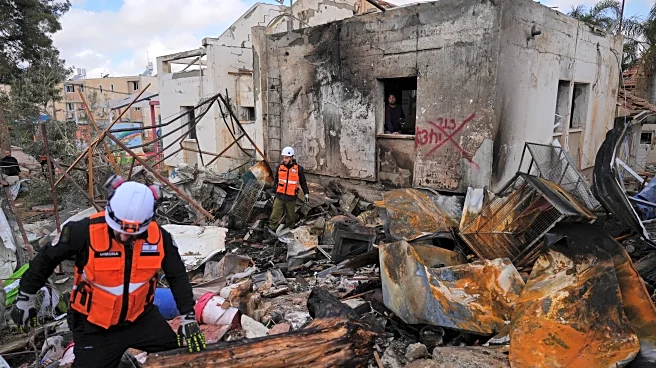
On March 21, Iranian missile strikes targeted southern Israel, including the areas of Dimona and Arad, which are in close proximity to Israel's nuclear research infrastructure. The attacks resulted in injuries to over 100 people and caused significant
structural damage. Although the missiles did not directly hit the Shimon Peres Negev Nuclear Research Center, at least one missile landed nearby. The International Atomic Energy Agency (IAEA) confirmed that there was no damage to the nuclear facility and no abnormal radiation levels were detected. The Dimona site is strategically sensitive due to its association with Israel's nuclear research program, making military activity in the area particularly concerning. The strikes are part of a broader pattern of escalation between Iran and Israel, involving direct attacks on critical infrastructure.
Why It's Important?
The missile strikes near Israel's nuclear research center underscore the heightened risks associated with military operations in sensitive areas. Such actions could lead to unintended consequences, including infrastructure disruption or miscalculation, even if the nuclear facility itself is not directly hit. The IAEA's call for restraint highlights the international community's concern over the potential for escalation in conflicts involving nuclear sites. The strikes are indicative of a shift towards targeting higher-value and strategically significant locations, which could further destabilize the region. This development has implications for international security and the potential for broader conflict, as it increases the likelihood of further incidents involving sensitive sites.
What's Next?
The ongoing conflict between Iran and Israel is likely to continue, with both sides potentially targeting critical infrastructure in future exchanges. The pattern of escalation suggests that similar incidents could occur again, raising the risk of miscalculation or system failure. The international community may increase diplomatic efforts to de-escalate tensions and prevent further military actions near nuclear sites. Monitoring the situation closely will be crucial to understanding the evolving dynamics and potential for broader regional implications.