


What's Happening?
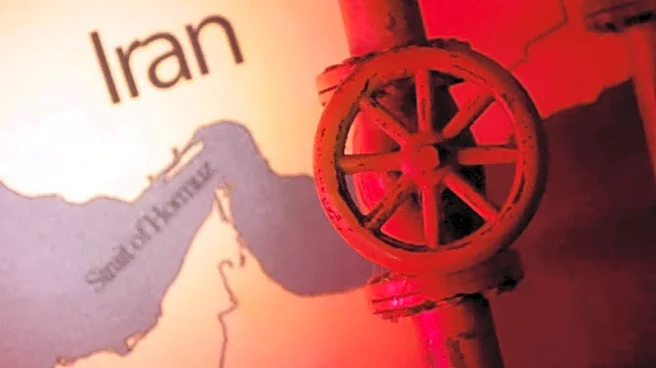
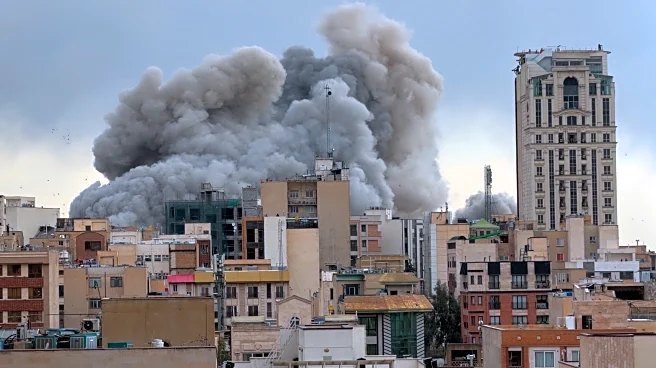
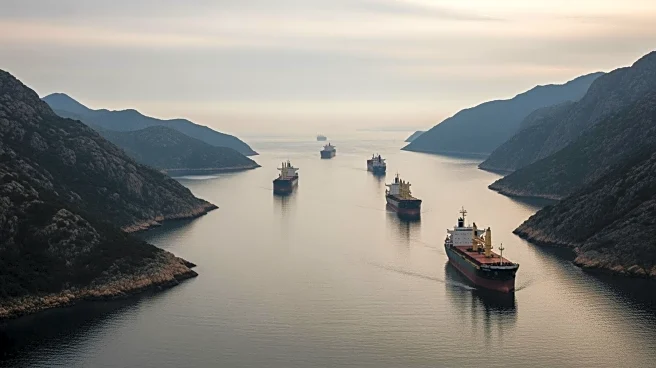
The Strait of Hormuz, a critical maritime passage for global oil and gas transportation, has experienced a significant reduction in shipping traffic due to the ongoing conflict involving the United States, Israel, and Iran. Timelapse footage has revealed
a noticeable decrease in the number of ships traversing this vital waterway since the commencement of military operations by the US and Israel on February 28. The Strait of Hormuz is a strategic chokepoint through which approximately 20% of the world's oil and gas supply is transported. The disruption in shipping traffic highlights the broader impact of the conflict on international trade and energy markets.
Why It's Important?
The decline in shipping traffic through the Strait of Hormuz has substantial implications for global energy markets and international trade. As a major conduit for oil and gas, any disruption in this region can lead to increased energy prices and supply chain uncertainties. The conflict between the US, Israel, and Iran exacerbates geopolitical tensions, potentially affecting global economic stability. Countries reliant on oil imports from the Gulf region may face challenges in securing energy supplies, prompting shifts in energy policies and strategies. The situation underscores the vulnerability of global trade routes to regional conflicts and the need for diplomatic efforts to ensure maritime security.
What's Next?
The ongoing conflict and its impact on the Strait of Hormuz may prompt international diplomatic interventions aimed at de-escalating tensions and ensuring the security of this critical shipping lane. Stakeholders, including major oil-importing nations and international organizations, may seek to mediate between the involved parties to prevent further disruptions. Additionally, countries may explore alternative energy sources or routes to mitigate the risks associated with reliance on the Strait of Hormuz. The situation remains fluid, with potential for further developments depending on the actions of the US, Israel, and Iran, as well as the international community's response.