






What's Happening?
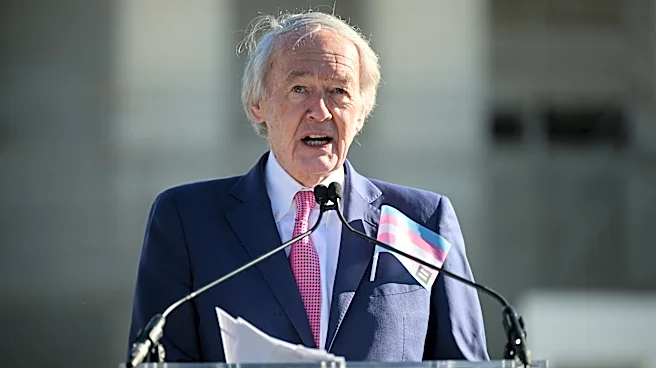
Democratic voters in Massachusetts have largely opted to retain long-serving incumbents over younger challengers in recent primary elections, despite a broader push for generational change within the party. Senator Ed Markey, an 80-year-old progressive
with 50 years in Congress, successfully fended off a primary challenge from 47-year-old Representative Seth Moulton. Moulton's campaign focused on the need for new leadership and highlighted Markey's age, particularly after a debate stumble regarding artificial intelligence. This marks the second consecutive election cycle where Markey has defeated a younger opponent, benefiting from his progressive credentials and support from movement leaders. Similarly, Representative Stephen Lynch, 71, and Representative Richard Neal, 77, also secured victories against younger candidates who advocated for an end to 'wait-your-turn' politics. These outcomes suggest that while there is a general desire for new leadership, voters are conditional, often prioritizing progressive alignment and established records over age alone.
Why It's Important?
The Massachusetts primary results highlight a nuanced dynamic within the Democratic Party regarding generational change. While there's a growing sentiment for new leadership, particularly after the 2024 election losses and concerns about President Biden's age, these results indicate that voters are not uniformly prioritizing youth over experience or ideological alignment. The success of incumbents like Markey, Lynch, and Neal demonstrates the enduring power of incumbency, name recognition, and established progressive credentials. This trend suggests that simply being a younger candidate is not enough to unseat long-serving politicians, especially if the incumbent is perceived as a 'fighter' for progressive causes. This could influence future primary strategies for both challengers and incumbents, emphasizing the need for clear ideological distinctions and strong voter engagement beyond just age-based appeals. The outcomes also reflect a broader voter dissatisfaction with the political system, where 'change agents' are sought, but the definition of 'change' can vary, sometimes favoring experienced progressives over newer, potentially more moderate, faces.
What's Next?
With the current primary season winding down, there are no immediate generational challenges for Democrats on the ballot this year. However, the debate surrounding age and leadership within the Democratic Party is expected to intensify as attention shifts towards the 2028 presidential election, which currently lacks a clear front-runner. The outcomes in Massachusetts could serve as a case study for future primary contests, indicating that challengers will need to offer more than just youth to unseat established incumbents. They may need to articulate a more compelling vision for change or demonstrate a stronger progressive stance to resonate with voters. Conversely, older incumbents might feel less pressure to step down voluntarily, especially if they continue to demonstrate strong progressive bona fides and voter support. The ongoing discussion about age limits for elected officials, which has bipartisan support, could also gain further traction, potentially leading to future legislative proposals or constitutional amendments.
Beyond the Headlines
The Massachusetts primary results underscore a deeper tension within the Democratic Party: the balance between experience and renewal. While there's a clear desire among some voters for fresh perspectives and an end to 'wait-your-turn' politics, the outcomes reveal that this desire is often conditional. Voters are not simply seeking younger candidates; they are looking for effective leaders who align with their values and can deliver results. This suggests that the narrative of 'generational change' is more complex than a simple age-based transition. It touches upon issues of political efficacy, ideological purity, and the perceived ability of candidates to challenge the status quo. The continued success of long-serving progressives like Senator Markey highlights the importance of a consistent track record and strong ties to activist movements. This dynamic could lead to a re-evaluation of what constitutes 'change' within the party, potentially favoring candidates who are seen as 'fighters' regardless of age, and pushing for more substantive policy shifts rather than just a change in personnel.