




What's Happening?
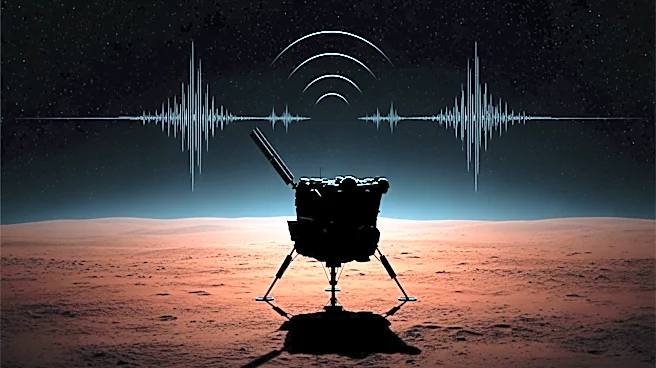
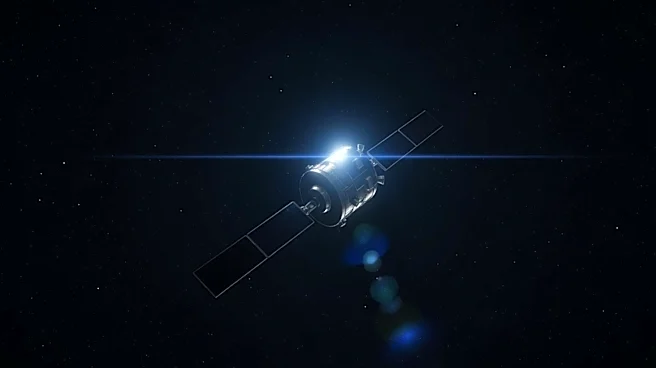
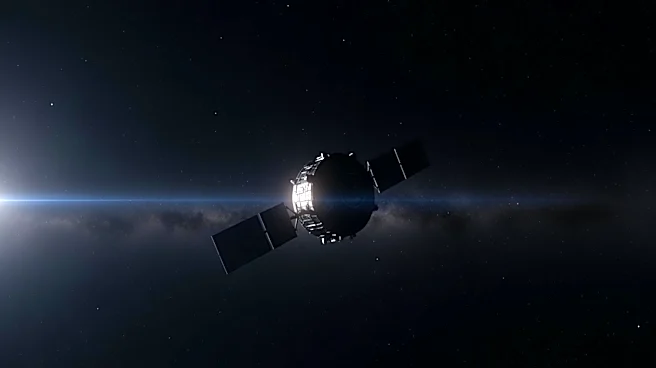
The United Arab Emirates (UAE) successfully launched its Hope Probe, marking the first Arab interplanetary mission. The probe, launched on July 20, 2020, reached Mars' orbit on February 9, 2021, after a seven-month journey. This mission was developed
in collaboration with American universities and represents a significant milestone for the UAE, which established its space program in 2006. The Hope Probe was designed to coincide with the UAE's 50th anniversary, symbolizing the nation's rapid technological advancement. The mission aims to provide a comprehensive global map of Mars' atmosphere, offering insights into the planet's climate and atmospheric escape processes.
Why It's Important?
The Hope Mission is a testament to the UAE's ambition and capability in space exploration, achieved in a remarkably short timeframe. It highlights the UAE's commitment to advancing its scientific and technological sectors, inspiring future generations in the Arab world. The mission's success enhances the UAE's global standing in space science and technology, demonstrating its ability to collaborate internationally and achieve significant scientific goals. The data collected by the Hope Probe will contribute to the global understanding of Mars, benefiting the international scientific community.
Beyond the Headlines
The Hope Mission serves as a symbol of national pride and a strategic tool for the UAE to position itself as a leader in space exploration within the Arab world. It also emphasizes the importance of international collaboration in achieving complex scientific objectives. The mission's success could inspire other nations in the region to invest in space technology and STEM education, fostering a new era of scientific innovation and exploration. The UAE's approach to rapidly developing its space program could serve as a model for other emerging space nations.