



What's Happening?
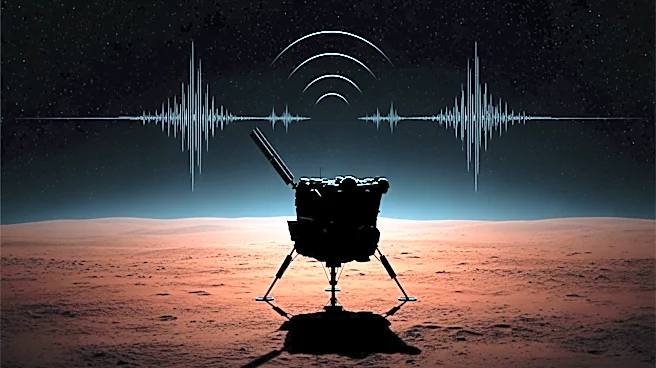
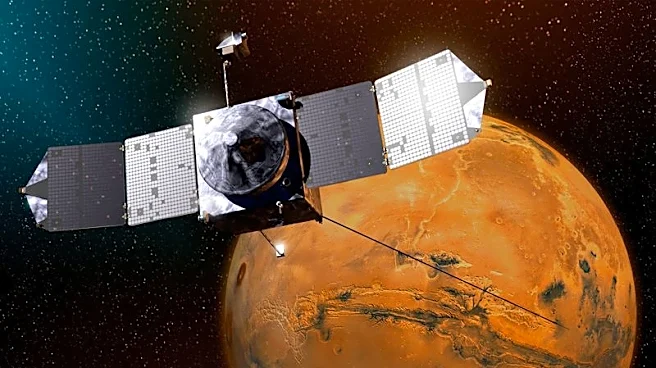
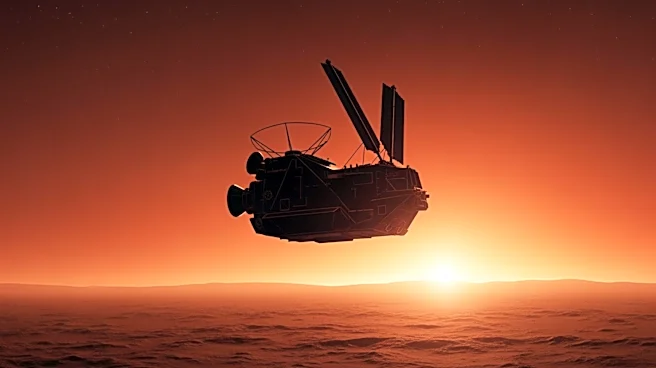
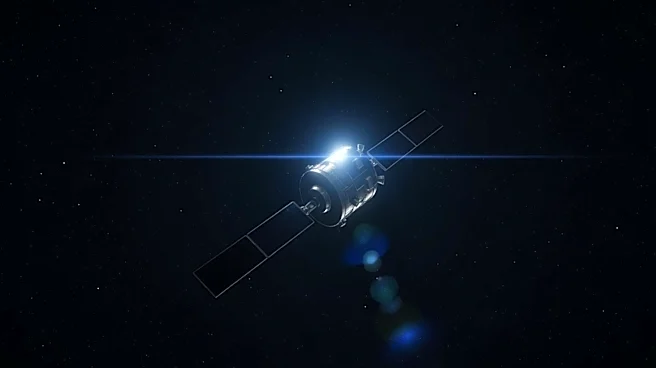
NASA has announced the cessation of efforts to recover the Mars Atmosphere and Volatile Evolution (MAVEN) spacecraft after it lost contact with Earth. The spacecraft, which had been orbiting Mars since 2014, was expected to re-establish communication
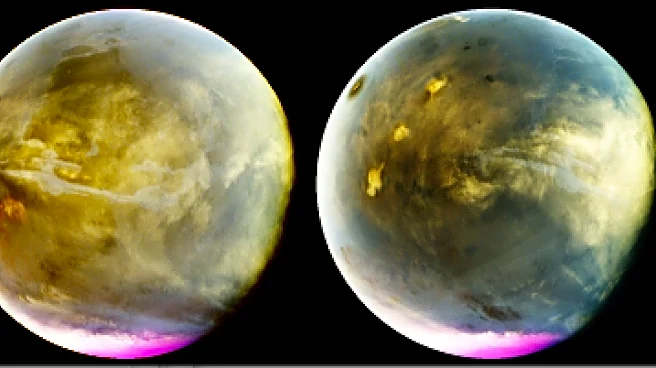
after a routine occultation on December 6, 2025. However, the signal was never regained, prompting NASA to initiate contingency plans to restore contact. Despite these efforts, the mission was declared over, and decommissioning activities have begun. MAVEN was launched in 2013 to study the interaction between the Martian atmosphere and solar wind, and it exceeded its expected mission duration by several years. The exact cause of the communication failure remains unknown, though engineers have managed to recover some telemetry data that might provide insights into the spacecraft's final moments.
Why It's Important?
The loss of MAVEN marks the end of a significant mission that contributed valuable data on Mars' atmospheric conditions and its interaction with solar winds. This data has been crucial in understanding atmospheric escape processes, which have implications for Mars' climate history and its potential to support life. The mission's end highlights the challenges of long-term space exploration and the need for robust communication systems. The data collected by MAVEN will continue to be analyzed, potentially offering insights into atmospheric processes on other planets. The mission's conclusion also underscores the importance of ongoing and future Mars missions in piecing together the planet's history and assessing its habitability.
What's Next?
NASA will focus on analyzing the recovered telemetry data to understand the cause of MAVEN's failure. This analysis could inform future missions and improve the design and operation of spacecraft. Meanwhile, other Mars missions, such as the Perseverance rover and the upcoming Mars Sample Return mission, will continue to explore the planet, building on MAVEN's legacy. The data from MAVEN will remain a valuable resource for scientists studying planetary atmospheres and solar interactions.