




What's Happening?
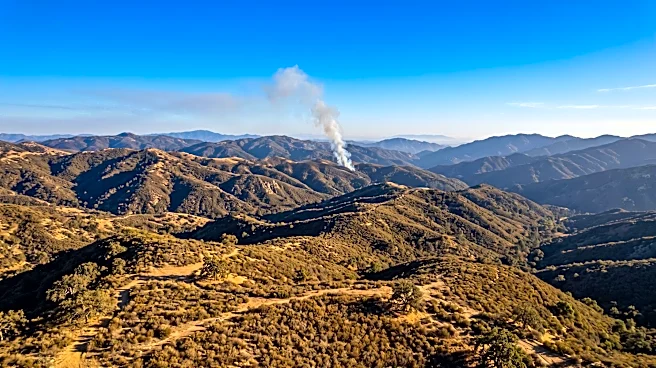
Engineers at the University of Southern California (USC) are collaborating with the California Department of Forestry and Fire Protection (Cal Fire) to create an artificial intelligence (AI) tool named GenFire. This tool aims to accurately identify the ignition
point of wildfires and reconstruct their spread during the initial 24 hours. The project, supported by a grant from the U.S. Forest Service and the Department of the Interior’s Joint Fire Science Program (JFSP), seeks to overcome current challenges in wildfire investigations, which often rely on time-consuming physical evidence and limited satellite data. GenFire will be trained using environmental data such as wind, temperature, humidity, terrain, and vegetation, alongside fire detection observations. The AI will work backward from observed fire spread to generate possible scenarios of how the fire developed, ultimately pinpointing the most probable ignition area. The research team plans to validate GenFire against approximately 100 historical wildfires with known origins and intends to make the tool open source for broader use by fire investigators and scientists.
Why It's Important?
The development of GenFire is crucial for improving wildfire management and prevention efforts across the U.S., particularly in states like California that are frequently impacted by devastating fires. Current methods for determining wildfire origins are often slow and imprecise, making it difficult to establish accountability and implement targeted prevention strategies. By providing a more scientifically rigorous and rapid method for tracing fire origins, GenFire can help distinguish between natural causes, accidents, and criminal acts like arson. This enhanced accuracy will enable fire experts to better understand ignition events, leading to more effective prevention measures and potentially reducing the frequency and severity of future wildfires. The open-source nature of the tool also means that its benefits could extend beyond California, offering a valuable resource for fire agencies nationwide and fostering collaborative advancements in wildfire forensics.
What's Next?
The GenFire project is scheduled to launch next month and will span two years. During this period, the research team will collaborate with the Wildland Fire Investigation Subcommittee (WFISC) to test the tool and ensure its operational relevance. A key next step involves training GenFire on thousands of virtual wildfires generated by a physics-based simulation model, which will help the AI learn how environmental factors influence fire behavior. Following this, the model will be tested against historical wildfires to measure its accuracy in predicting ignition locations. The team also plans to adapt the FireLoc framework to process continuous camera footage from networks like ALERTCalifornia, providing GenFire with more frequent observations. The ultimate goal is to make GenFire an open-source resource, allowing fire investigators and scientists to utilize, evaluate, and build upon the technology, thereby streamlining fire investigations and informing future prevention and mitigation efforts.
Beyond the Headlines
The introduction of AI tools like GenFire represents a significant shift in how wildfire investigations are conducted, moving towards a more data-driven and technologically advanced approach. This development highlights the growing integration of artificial intelligence into critical public safety sectors, offering the potential for increased efficiency and accuracy in complex forensic analyses. Beyond its immediate application in pinpointing fire origins, GenFire could contribute to a deeper understanding of wildfire dynamics, including the interplay of environmental factors and human activities. The ethical implications of using AI in investigations, such as data privacy and the potential for algorithmic bias, will need careful consideration as the tool is developed and deployed. Furthermore, the success of GenFire could pave the way for similar AI applications in other disaster response and environmental management fields, fostering a broader adoption of advanced technological solutions to address pressing societal challenges.