







What's Happening?
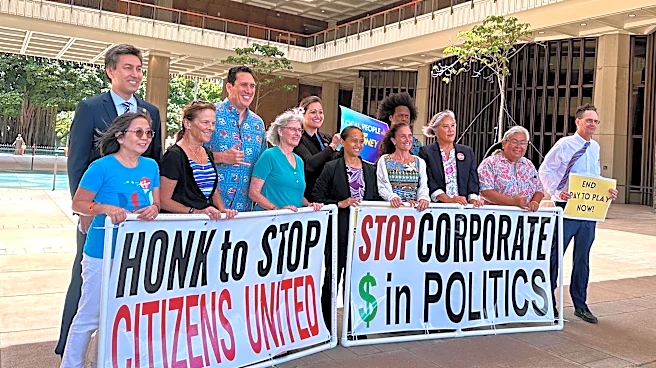
Hawaii's state legislature has passed a bill aimed at restricting corporate political spending, challenging the precedent set by the 2010 Citizens United Supreme Court decision. The legislation, which awaits the signature of Governor Josh Green, seeks
to alter the powers of corporations by preventing them from spending on most political causes. This move is part of a broader strategy to reduce the influence of 'dark money' in politics by redefining corporate personhood under state law. The bill, if signed, would apply to for-profit companies, nonprofits, unions, and chambers of commerce, potentially cutting off a significant revenue stream for super PACs. The initiative, led by State Senator Jarrett Keohokalole, argues that corporations, as creations of the state, should not possess inalienable rights akin to natural persons.
Why It's Important?
The proposed legislation in Hawaii represents a significant challenge to the Citizens United ruling, which has allowed corporations to spend unlimited amounts on political campaigns under the guise of free speech. By attempting to redefine corporate personhood, Hawaii could set a precedent for other states seeking to curb corporate influence in politics. This move could lead to a reduction in the political power of super PACs, which have been major players in U.S. elections. However, the bill faces potential legal challenges, as opponents argue it conflicts with established First Amendment rights. If successful, this legislation could inspire similar efforts across the country, potentially reshaping the landscape of campaign finance in the United States.
What's Next?
Governor Josh Green's decision on whether to sign the bill will be crucial. If signed, the legislation is expected to face legal challenges that could escalate to the Supreme Court, testing the balance between state powers and constitutional rights. The outcome of these legal battles could have far-reaching implications for campaign finance laws nationwide. Additionally, the bill's progress will likely reignite national debates on the role of corporate money in politics and the definition of corporate personhood. Stakeholders, including political leaders, legal experts, and advocacy groups, will closely monitor the situation, as it could influence future legislative efforts in other states.