
What's Happening?
A new species of carnivorous dinosaur, Jian changmaensis, has been discovered in the Changma Basin of northwestern China. This dinosaur, part of the Microraptorinae group, is notable for being much larger
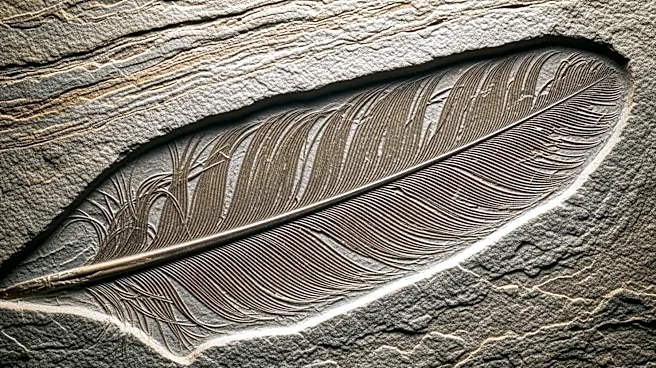
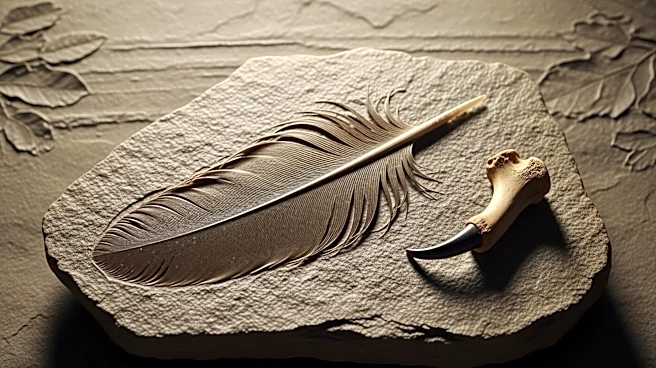
than other non-bird species found at the site. The discovery is significant as it extends the known range of Microraptorinae, previously only found in northeastern China, into northwestern China. Jian changmaensis is the first non-avian dinosaur found at a site known for over 100 specimens of Early Cretaceous birds. The dinosaur is believed to have had long feathers on both its arms and legs, suggesting it could glide like a flying squirrel.
Why It's Important?
The discovery of Jian changmaensis provides new insights into the distribution and ecological context of non-avian dinosaurs in the Early Cretaceous period. It highlights the diversity of the Microraptorinae group and suggests that non-avian dinosaurs coexisted with early birds in the Changma Basin. This finding is crucial for understanding the evolutionary history of birds and their dinosaur ancestors. The presence of Jian changmaensis in a region previously dominated by bird fossils suggests a more complex ecosystem than previously thought, offering a new perspective on the interactions between early birds and their dinosaur relatives.
What's Next?
Further research and excavation in the Changma Basin could uncover more specimens of Jian changmaensis or other non-avian dinosaurs, providing additional data on the diversity and distribution of dinosaurs in this region. Paleontologists may focus on understanding the ecological roles of these dinosaurs and their interactions with early birds. The discovery also raises questions about the migration and adaptation of Microraptorinae dinosaurs, which could be explored through comparative studies with other fossil sites.
Beyond the Headlines
The discovery of Jian changmaensis challenges previous assumptions about the geographic range of Microraptorinae dinosaurs and their ecological niches. It underscores the importance of continued paleontological exploration in under-studied regions, which can yield significant findings that reshape our understanding of prehistoric life. The study of Jian changmaensis also contributes to broader discussions on the evolution of flight in dinosaurs and the transition to modern birds.