





What's Happening?
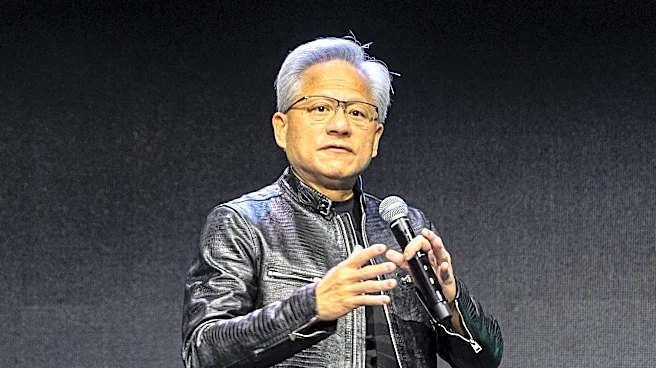
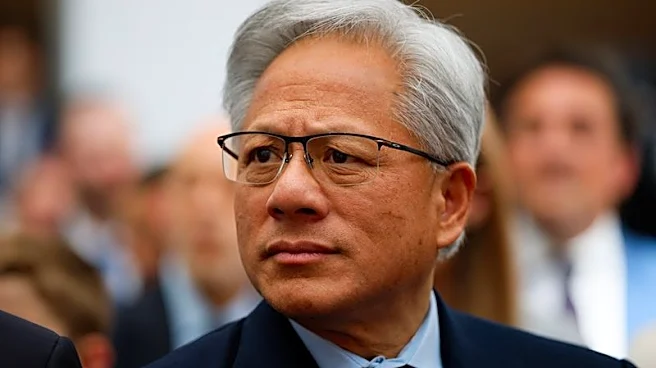
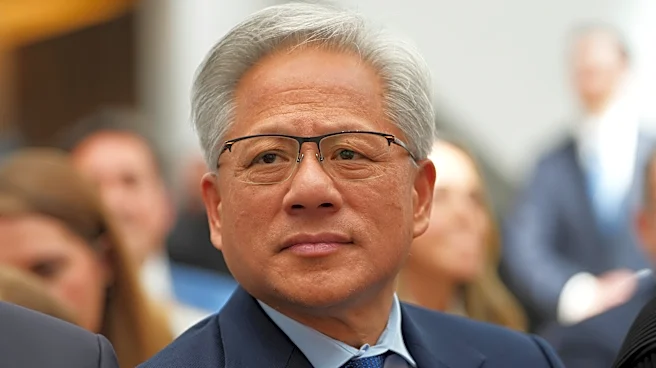
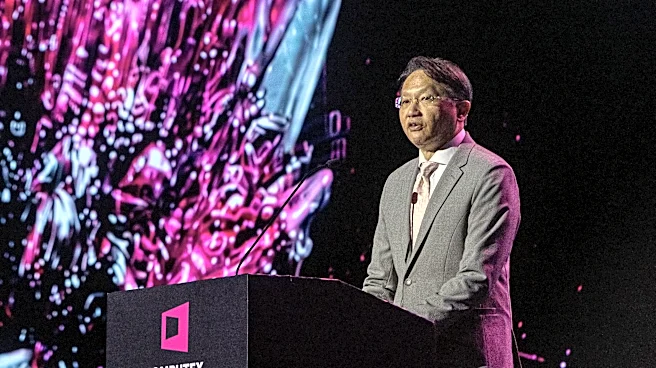
Jensen Huang, the CEO of Nvidia, has publicly admitted to an affair with Alice Huang, a top executive at the data center company Megaspeed. The U.S. government has alleged that Alice Huang is a Chinese spy. This admission comes amidst a period of rapid
growth for Nvidia, which became the first company to hit a $5 trillion market cap in October 2025, largely driven by its role in the AI boom. Jensen Huang, a Taiwanese and American electrical engineer and business executive, co-founded Nvidia in 1993 and has served as its President and CEO since. His personal life has recently drawn scrutiny, including a November 2026 investigation by Nvidia's board of directors into his relationship with an executive of a client company. As of October 2026, Forbes listed him as one of the richest men in the world with a net worth exceeding $200 billion.
Why It's Important?
This development carries significant implications for U.S. national security and the technology sector. Nvidia is a critical supplier of accelerated computing chips, which are fundamental to the ongoing AI revolution. The alleged involvement of a Chinese spy in a relationship with the CEO of such a pivotal company could expose sensitive technological advancements and strategic information to a foreign adversary. This situation could lead to increased scrutiny of U.S. technology executives' personal and professional relationships, particularly those with ties to foreign entities. It also highlights potential vulnerabilities within the U.S. tech industry to espionage and intellectual property theft, potentially impacting the competitive edge of American companies in the global AI race. The scandal could also affect investor confidence in Nvidia and other tech firms, given the potential for government intervention or sanctions.
What's Next?
The U.S. government is expected to intensify its investigation into Alice Huang's alleged espionage activities and the extent to which Jensen Huang's affair may have compromised national security or corporate secrets. Nvidia's board of directors, which initiated an investigation in November 2026, will likely face pressure to take further action, potentially including a review of Huang's leadership or enhanced security protocols within the company. This incident could also prompt broader policy discussions in Washington regarding the protection of critical technology and the oversight of relationships between U.S. tech leaders and foreign nationals, especially those from countries deemed strategic competitors. The implications for the global economy, particularly the AI sector, will be closely watched as the scandal unfolds.
Beyond the Headlines
The 'Jensen Huang Affair' transcends a typical corporate scandal, touching upon complex ethical, legal, and geopolitical dimensions. It underscores the increasing convergence of personal conduct, corporate governance, and national security in an era of intense technological competition. The incident could trigger a re-evaluation of corporate espionage countermeasures and the due diligence processes for executives in sensitive industries. Furthermore, it highlights the challenges of maintaining technological leadership while navigating a globalized business environment where state-sponsored espionage is a persistent threat. The affair may also fuel public debate about the responsibilities of high-profile executives and the potential for personal relationships to become national security liabilities, potentially leading to stricter regulations or guidelines for corporate leaders in critical sectors.