
What's Happening?
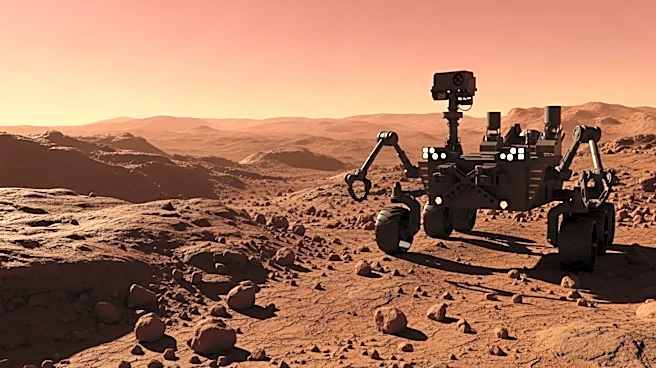
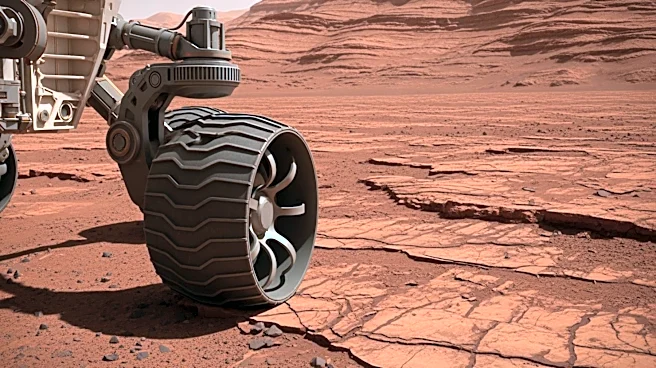
NASA's Perseverance rover has captured a new selfie on Mars, marking its farthest journey west since landing in 2021. The image, composed of 61 individual photographs, was taken during the rover's fifth
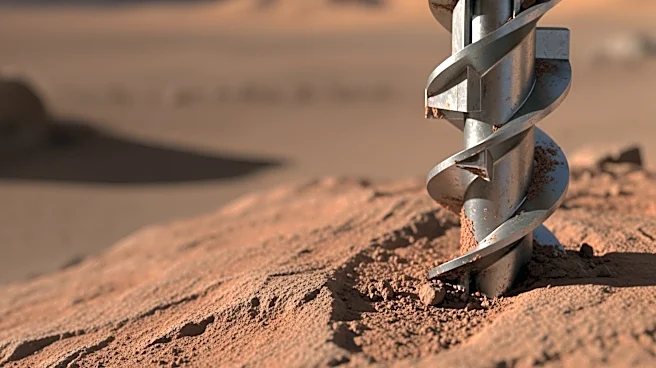
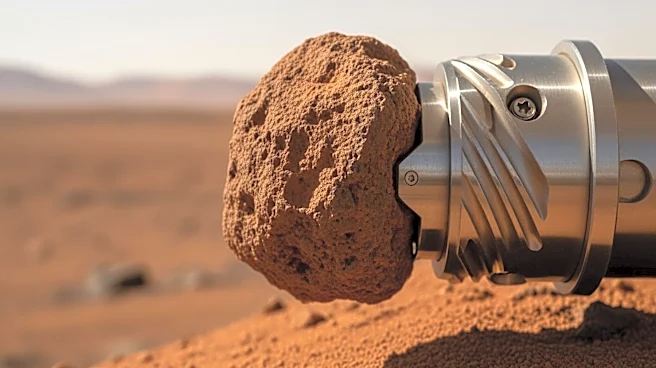
science campaign near the western edge of Jezero Crater. This area is considered one of the oldest and most geologically interesting terrains explored by the Mars 2020 mission. The rover used its abrasion tool to grind a circular patch into a rock, revealing igneous minerals formed from molten rock billions of years ago. This discovery suggests that the Arathusa area may offer insights into Mars' ancient crust and volcanic history, unlike the sediment-rich river delta explored earlier in the mission.
Why It's Important?
The Perseverance rover's findings in the Arathusa area are significant as they provide a direct look at Mars' ancient geological conditions. The presence of igneous minerals indicates that the region may hold clues about the planet's early crust and volcanic activity. This information is crucial for understanding Mars' formation and evolution, including whether it once had a magma ocean. The rover's exploration contributes to the broader goal of searching for signs of ancient microbial life on Mars, enhancing our understanding of the planet's habitability in the past.
What's Next?
Perseverance will continue its mission by traveling toward areas rich in olivine-bearing rocks. These rocks could help scientists better understand how Mars cooled and evolved over time. The rover's ongoing exploration and sample collection will provide valuable data for future missions and research, potentially paving the way for human exploration of Mars.