



What's Happening?
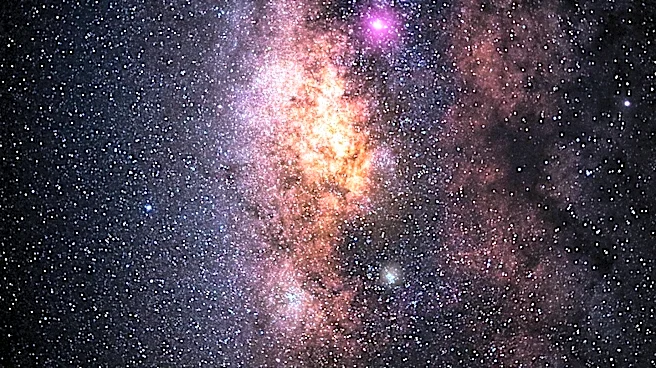
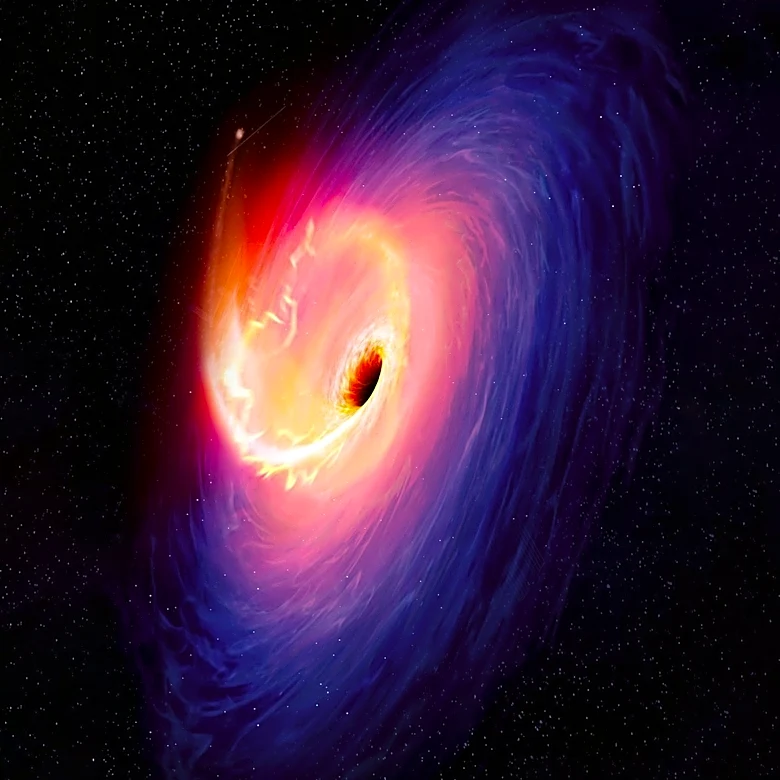
Astronomers have identified S301 as the fastest known star in the Milky Way, orbiting Sagittarius A*, the supermassive black hole at the galaxy's center. S301 reaches speeds of approximately 25,000 kilometers per second, or over 8% of the speed of light,
and passes closer to Sagittarius A* than any previously observed star, at a mere 12 times the Earth-to-Sun distance. This extreme proximity makes S301 the first star that could potentially be used to directly measure the spin of Sagittarius A*. According to Einstein's general theory of relativity, a rotating black hole drags and twists the surrounding spacetime, subtly altering the orbits of nearby objects. The closer an object is to a rapidly rotating black hole, the stronger this effect becomes. The discovery was made using the European Southern Observatory's Very Large Telescope Interferometer (ESO’s VLTI) and its GRAVITY instrument.
Why It's Important?
The discovery of S301 provides an unprecedented opportunity to test Einstein's theory of general relativity in the extreme gravitational environment of a supermassive black hole. Directly measuring the spin of Sagittarius A* would be a key validation of this fundamental theory, offering insights into the dynamics of spacetime under immense gravitational forces. This measurement could also help astronomers understand the formation and evolution of supermassive black holes and their host galaxies. Current observations of other stars near Sagittarius A* would require several more decades to achieve similar precision in measuring the black hole's spin. S301's unique orbit significantly accelerates this scientific endeavor, opening a new window into the fundamental properties of spacetime in this extreme cosmic setting.
What's Next?
The next crucial phase involves observing S301 through at least two complete orbits around Sagittarius A*. Continued observations with GRAVITY+ and the MICADO instrument on ESO’s upcoming Extremely Large Telescope (ELT) will track its motion over the coming decade, including its next closest approach in 2031. By precisely monitoring its trajectory, astronomers expect to constrain its orbit accurately enough to directly determine the spin of Sagittarius A*. The star's orbit also suggests it was once part of a binary system that was torn apart by Sagittarius A*'s tidal forces, with S301 being captured and its companion likely ejected from the Milky Way. Further studies will aim to confirm this origin story and refine our understanding of how stars end up in such close proximity to supermassive black holes.
Beyond the Headlines
The ability to directly measure the spin of a supermassive black hole like Sagittarius A* represents a profound advancement in astrophysics. It moves beyond theoretical predictions and indirect observations, offering empirical data from the heart of our galaxy. This research highlights the incredible precision and power of modern astronomical instruments, such as the VLTI, which can detect and track incredibly faint objects in crowded cosmic environments. The study also touches upon the violent and dynamic processes that shape galaxies, where gravitational forces can tear apart stellar systems. Understanding the spin of Sagittarius A* could provide clues about its accretion history and the processes that fueled its growth over billions of years, offering a deeper understanding of the cosmic ballet between stars and black holes.