



What's Happening?
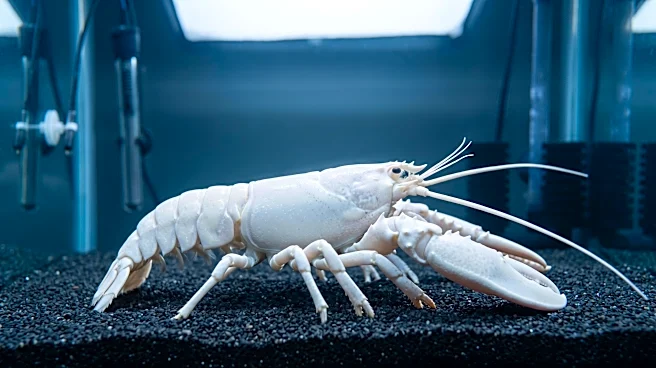
A rare white lobster, named Casper, has been donated to the University of New England’s Arthur P. Girard Marine Science Center in Biddeford, Maine. This 'ghost' lobster is estimated to be a one-in-100-million find due to its unusual white shell coloration.
Casper was transferred from the Maine State Aquarium in Boothbay and is now part of a unique research project. This project aims to examine why some American lobsters develop such unusual shell colors and how these traits might be passed down through generations. American lobsters typically have a mottled brown appearance, but genetic variations can result in striking colors like blue, orange, yellow, purple, calico, and split-colored patterns. White lobsters are considered the rarest of these variations, making Casper a valuable addition to the research collection. The research, led by Markus Frederich, Ph.D., a professor of marine sciences at UNE and director of the Invertebrate Physiology Lab, uses noninvasive methods to collect and analyze genetic material.
Why It's Important?
The study of Casper, the rare white lobster, is important for advancing scientific understanding of marine biology and genetics. By analyzing its unusual coloration, researchers can gain insights into the molecular mechanisms that control pigmentation in lobsters. This research could have broader implications for understanding genetic diversity and evolutionary processes in marine species. The rarity of white lobsters, estimated at one in 100 million, makes Casper a unique specimen for genetic analysis, potentially revealing novel genes or pathways involved in color expression. Furthermore, the project highlights the value of collaboration between aquariums and research institutions in conserving and studying rare marine life. The noninvasive methods used in the research ensure the well-being of the lobsters while still allowing for critical data collection. This scientific endeavor contributes to the growing body of knowledge about marine ecosystems and the complex genetic factors that shape their inhabitants.
What's Next?
Researchers at the University of New England’s Arthur P. Girard Marine Science Center will continue to analyze Casper’s genetic material, focusing on identifying the specific genes responsible for its rare white coloration. This effort builds upon previous work with other rare-colored lobsters, such as Peaches, an orange lobster whose offspring exhibited various shell colors. Scientists are currently analyzing over 15,000 genes to pinpoint genetic differences associated with shell color. Casper’s arrival expands the project to include the rarest coloration studied so far, providing an unprecedented opportunity to investigate the genetic underpinnings of extreme color variations. The findings from this research could help scientists better understand how these rare color traits occur and whether they are heritable. The project also emphasizes the involvement of undergraduate students, providing them with hands-on research experience in marine science and genetics.
Beyond the Headlines
The discovery and study of Casper, the 'ghost' lobster, extends beyond its scientific implications to touch upon broader themes of biodiversity, conservation, and public engagement with science. Rare genetic variations like Casper's serve as natural wonders that capture public imagination, potentially inspiring greater interest in marine conservation and scientific research. Ethically, the noninvasive approach to studying Casper underscores a commitment to animal welfare in scientific endeavors. Culturally, such unique creatures can become symbols of natural rarity and the unexpected beauty found in the natural world. The research also highlights the importance of genetic diversity within species, as rare traits, while seemingly unusual, can sometimes offer evolutionary advantages or insights into species resilience. The project's inclusion of undergraduate students also speaks to the long-term investment in fostering the next generation of scientists and marine conservationists, ensuring continued exploration and protection of our oceans.