







What's Happening?
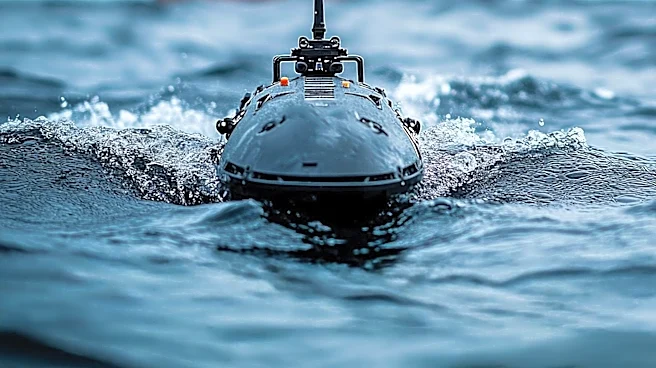
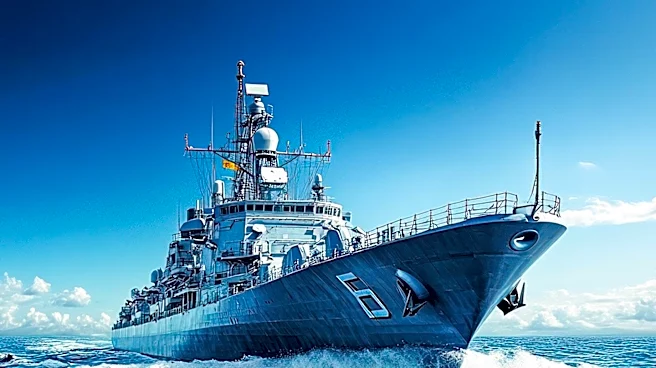
A Danish drone boat, developed by the Copenhagen-based company Stormborn, successfully monitored a Russian corvette, Soobrazitelny, in the Baltic Sea. The encounter occurred when the Russian warship, with its transponder off, approached the uncrewed Danish vessel,
which was anchored southeast of Bornholm. The drone boat, equipped with advanced sensors, filmed the corvette and logged radar tracks, which were later handed over to the Danish Navy's maritime surveillance service. This incident highlighted a surveillance gap in the Danish military's coastal radar coverage, as the drone boat was intentionally placed in a poorly monitored area to test its capabilities. The event underscores the potential of uncrewed naval systems in enhancing maritime surveillance.
Why It's Important?
The incident demonstrates the growing importance of autonomous maritime surveillance systems in national defense strategies. With traditional crewed ships offering limited operational availability due to maintenance and personnel needs, uncrewed vessels like Stormborn's drone boat provide a cost-effective solution for continuous monitoring. This capability is crucial for countries like Denmark, which face challenges in covering extensive maritime areas with limited naval resources. The successful operation of the drone boat against a Russian warship also underscores the strategic advantage of deploying autonomous systems in contested waters, potentially influencing future naval procurement and deployment strategies.
What's Next?
Following the successful demonstration, Stormborn plans to expand its fleet of uncrewed vessels, with a target of building 50 boats within a year. This expansion could significantly enhance Denmark's maritime surveillance capabilities, particularly in the Baltic Sea, where geopolitical tensions remain high. The Danish Ministry of Defence may consider integrating more autonomous systems into its fleet, potentially collaborating with other NATO allies to strengthen regional security. Additionally, the incident may prompt further investment in autonomous technology by other nations, as they seek to modernize their naval forces and improve surveillance capabilities.
Beyond the Headlines
The encounter between the Danish drone boat and the Russian corvette raises questions about the future of naval warfare and the ethical implications of deploying uncrewed systems. As these technologies become more prevalent, there will be increased scrutiny on their use in international waters and the potential for escalation in tense geopolitical environments. Furthermore, the ability of autonomous systems to operate without human intervention challenges traditional concepts of accountability and decision-making in military operations. These developments may lead to new international regulations and agreements governing the use of autonomous maritime systems.