


What's Happening?
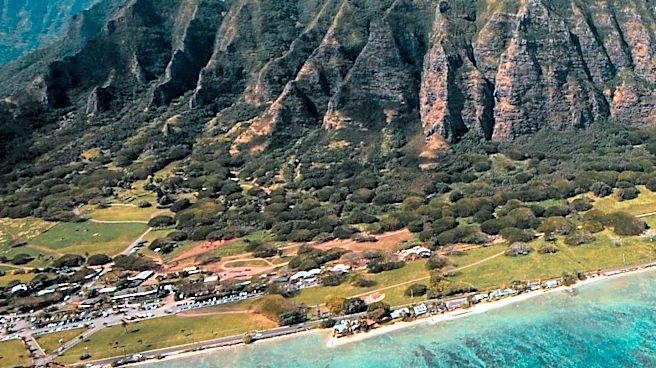
A new project off the Hawaiian island of O'ahu is deploying a 'living breakwater' system to shield coastal communities and infrastructure from destructive waves. By January 2027, 60 large concrete structures will be submerged near Kalaeloa Harbor, an industrial
port on West O'ahu. These structures are designed to act as speed bumps, dissipating approximately 80% of wave energy, and also to provide shelter for corals, eventually creating habitat for reef-dwelling fish and other marine life. The project, funded with $27 million from the Defense Advanced Research Projects Agency (DARPA), is a prototype under DARPA's 'Reefense' program, which seeks innovative coastal infrastructure solutions beyond traditional seawalls. The porous concrete frames are fitted with 'helix recesses' to encourage coral attachment, and researchers will use underwater speakers to attract coral settlement. The Hawaii Department of Transportation (HDOT) will assume ownership of the breakwater upon installation, with initial operations funded by state Green Fee funds.
Why It's Important?
This 'living breakwater' project represents a significant advancement in coastal resilience strategies, moving beyond conventional hard infrastructure like seawalls that can harm marine ecosystems. By integrating ecological restoration with coastal protection, Hawaii is pioneering a sustainable approach to mitigate the impacts of increasingly intense storms and rising sea levels, exacerbated by climate change. The project's dual objective of protecting infrastructure and creating coral habitat addresses critical environmental and economic concerns for the state. Successful implementation could provide a replicable model for other vulnerable coastal regions globally, offering a more environmentally friendly and potentially self-sustaining solution. The involvement of community stakeholders and the funding mechanism through Green Fee funds highlight a collaborative and forward-thinking approach to environmental management and climate adaptation.
What's Next?
The installation of the 60 concrete structures off Kalaeloa Harbor is expected to be completed by January 2027. Following installation, the project team will commence measuring wave disruption to assess the effectiveness of the breakwater in reducing wave energy. Kuleana Coral Restoration, a local nonprofit, will assist in transplanting corals onto the ceramic edifices of the structures. The Hawaii Department of Transportation (HDOT) will take ownership of the breakwater, with the first year of operations funded by state Green Fee funds. Progress reports will be provided every six months to a coalition of community and industry stakeholders. If successful, this breakwater design could be replicated in other Hawaiian waters, offering a new paradigm for coastal protection and reef restoration.
Beyond the Headlines
The 'living breakwater' project in Hawaii carries profound implications beyond its immediate goals of coastal protection and coral restoration. It signifies a paradigm shift in how societies approach infrastructure development in the face of climate change, moving from purely engineered solutions to nature-based ones. This initiative could inspire a broader adoption of 'green infrastructure' that not only serves functional purposes but also enhances ecological value. Ethically, it represents a commitment to environmental stewardship and a recognition of the interconnectedness between human communities and natural ecosystems. Legally, the project's success could influence future environmental regulations and funding priorities for coastal resilience. Culturally, it resonates with traditional Hawaiian values of 'kuleana' (responsibility) towards the land and sea, fostering community engagement and a sense of shared ownership in environmental solutions. This project could catalyze long-term shifts in how coastal development is planned and executed, prioritizing ecological health alongside human safety and economic stability.