









What's Happening?
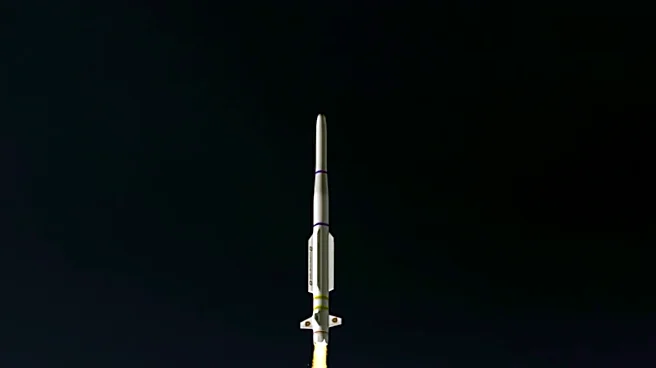
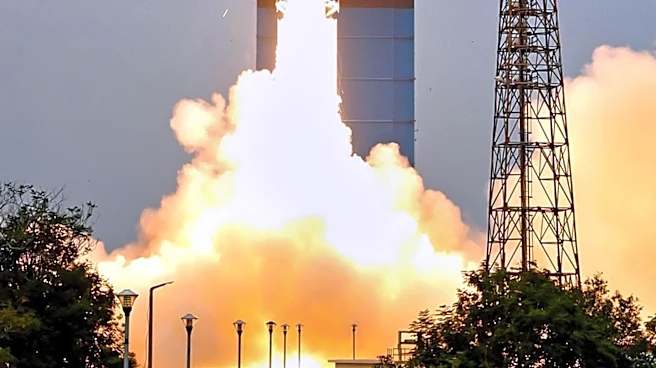
Skyroot Aerospace, an Indian space startup, successfully launched the country's first privately developed orbital rocket, Vikram-1, from the Satish Dhawan Space Centre. The launch, part of 'Mission Aagaman', placed several payloads into a 450 km orbit,
marking India as the third country to achieve private orbital launch capability. This mission aims to validate the rocket's systems for future commercial launches. Skyroot, founded in 2018, has attracted significant global investment following India's space sector liberalization. The company plans to conduct additional test flights before commencing routine commercial operations.
Why It's Important?
This launch represents a significant milestone for India's burgeoning private space industry, highlighting the country's growing capabilities in the global commercial launch market. By achieving private orbital launch capability, India joins the ranks of the U.S. and China, potentially increasing its share of the global space economy. The success of Skyroot's mission could encourage further investment in India's space sector, fostering innovation and competition. This development also underscores the shift towards privatization in space exploration, with private companies playing an increasingly vital role in advancing space technology and exploration.
What's Next?
Skyroot plans to conduct additional test flights to further validate the Vikram-1 rocket's systems before transitioning to routine commercial operations. The company aims to offer dedicated launches for small satellite operators, providing more flexible and customized launch options. As Skyroot continues to develop its capabilities, it may face competition from established players like SpaceX. However, the company's focus on the 'cab service to space' model could carve out a niche in the market. The Indian government is likely to continue supporting private space ventures, aiming to expand the country's presence in the global space economy.