



What's Happening?
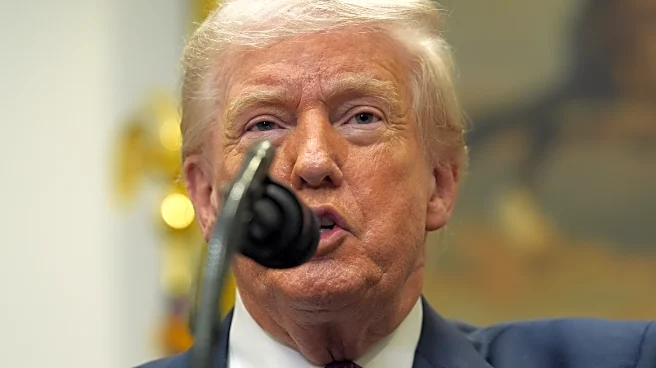
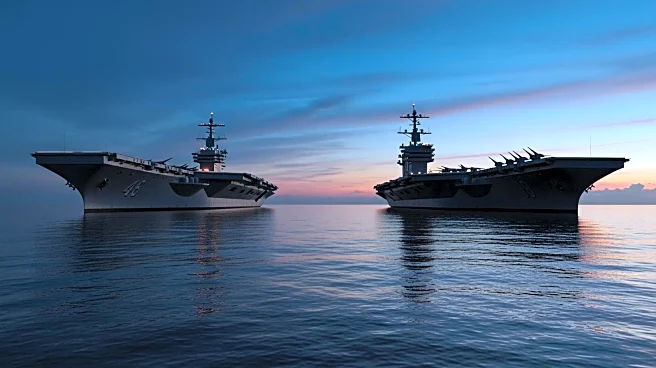
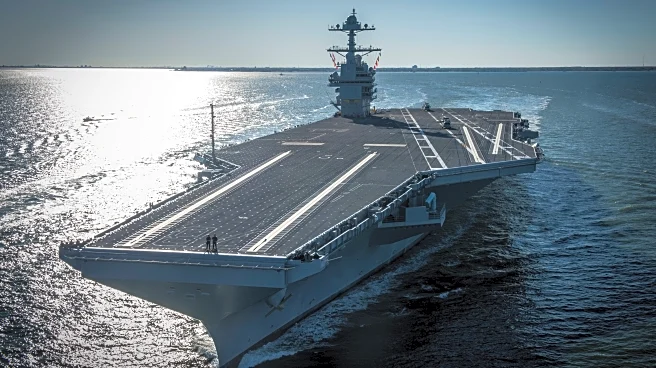
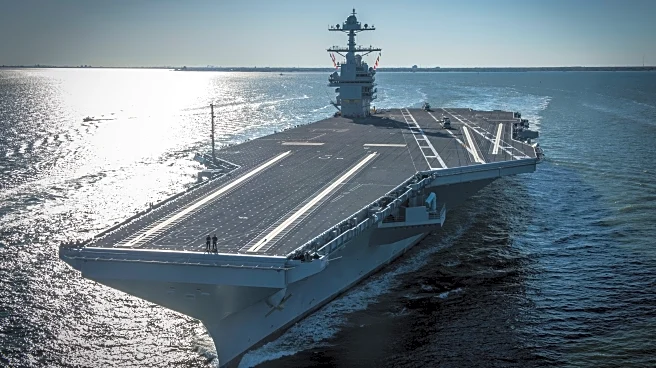
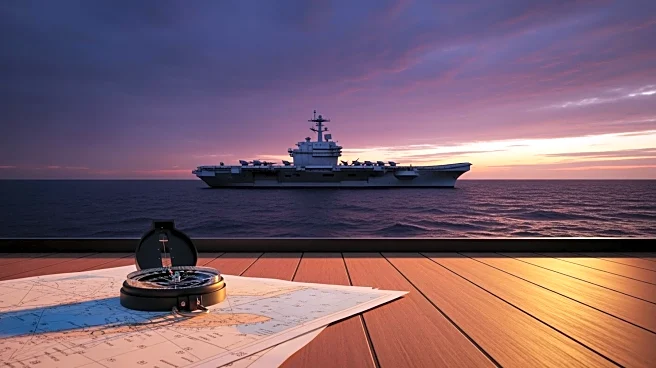
President Trump has indicated that the United States may deploy a second aircraft carrier to the Middle East if ongoing negotiations with Iran regarding its nuclear program do not succeed. The USS Gerald R. Ford is identified as the potential carrier to be
sent, which would take approximately a week to reach the region. This move is part of a broader strategy to exert pressure on Iran to reach a deal. The discussions are expected to continue, with a possible timeline for resolution within the next month. The deployment decision aligns with Trump's previous statements about the necessity of a deal to prevent further military escalation.
Why It's Important?
The potential deployment of a second aircraft carrier highlights the seriousness with which the U.S. is approaching the Iran nuclear negotiations. It reflects the administration's willingness to use military force as leverage in diplomatic discussions. The presence of additional military assets in the region could deter Iran from further nuclear development and signal to other regional actors the U.S.'s commitment to maintaining stability. This development is crucial for U.S. foreign policy, as it seeks to balance diplomatic efforts with military readiness in a volatile region.
What's Next?
Should the negotiations with Iran fail, the U.S. may proceed with deploying the USS Gerald R. Ford to the Middle East, increasing military pressure on Iran. This could lead to heightened tensions and potential confrontations in the region. Diplomatic efforts will likely continue in parallel, with the U.S. seeking support from allies to present a united front. The outcome of these talks will be pivotal in shaping future U.S.-Iran relations and the broader geopolitical landscape in the Middle East.