
What's Happening?
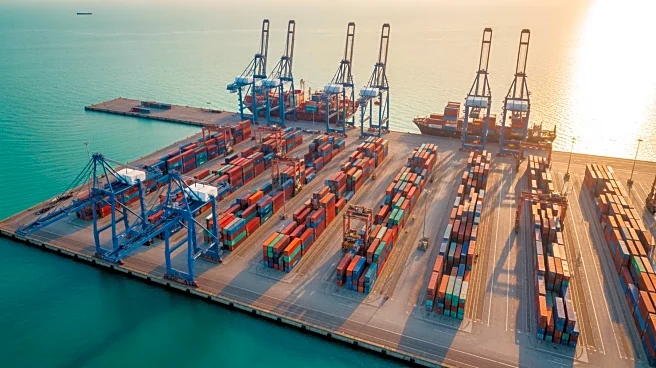
The Caribbean region is experiencing a surge in demand for logistics hubs due to expanding offshore oil and gas activities. Countries like Guyana, Trinidad and Tobago, and Suriname are enhancing their logistics infrastructure to support complex offshore developments.
These logistics hubs are crucial for drilling support, subsea installation, and regulatory compliance, especially in deepwater environments. Guyana's rapid offshore production growth is supported by facilities like the Vreed-en-Hoop Shore Base, while Trinidad and Tobago's Galeota Point serves as a key logistics center. Suriname is also expanding its logistics capacity to support its offshore discoveries.
Why It's Important?
The development of logistics hubs in the Caribbean is vital for the efficient execution of offshore oil and gas projects. These hubs enable regional producers to maintain continuous offshore activity, reduce operational delays, and participate effectively in global energy supply chains. For the U.S., this expansion represents both an opportunity and a challenge. American companies involved in the oil and gas sector may benefit from improved logistics and supply chain efficiencies. However, the increased competition and strategic positioning of other countries in the region could impact U.S. influence and market share in the global energy landscape.
What's Next?
As offshore activities continue to grow, further investments in logistics infrastructure are expected. Countries in the Caribbean will likely pursue a mix of private capital, public investment, and public-private partnerships to fund these developments. The focus will be on enhancing resilience, security, and compliance with international maritime standards. The success of these logistics hubs will depend on their ability to accommodate larger vessels, advanced equipment, and digitalized systems. Stakeholders will need to monitor regulatory changes and market dynamics to adapt their strategies accordingly.