



What's Happening?
A joint investigation by NPR and Boston University has found that heat-related deaths in the U.S. are drastically undercounted, with the actual number being approximately five times higher than official federal records. While federal data indicates an average
of about 1,700 heat-related deaths annually between 2018 and 2025, the investigation estimates the true figure to be around 9,000. This undercounting is attributed to several factors, primarily that heat often exacerbates existing health conditions rather than being the sole cause of death. Consequently, its role is frequently omitted from death certificates, even when it is a significant contributing factor. The case of Adam Willson, who died in an overheated home in Tucson, Arizona, illustrates this issue; despite his mother's belief that heat contributed to his death, his death certificate listed 'Unknown natural causes.' Medical professionals often face challenges in conclusively linking heat to a death, and unless explicitly sought out, this connection can be missed.
Why It's Important?
The significant undercounting of heat-related deaths has profound implications for public health policy and climate change adaptation strategies in the U.S. If the true scale of the problem is not accurately reflected in official statistics, policymakers may underestimate the urgency and resources required to address the health impacts of extreme heat. This can lead to insufficient funding for cooling centers, public awareness campaigns, and infrastructure improvements in vulnerable communities. As climate change continues to drive higher temperatures, particularly in regions like southern Arizona where Tucson now experiences significantly more days over 110 degrees, the health risks will only intensify. The lack of accurate data also hinders the ability of medical and public health systems to identify at-risk populations, develop effective interventions, and track the efficacy of mitigation efforts. Without a clear understanding of the problem's magnitude, the U.S. cannot adequately prepare for or respond to the growing threat of heat-related mortality.
What's Next?
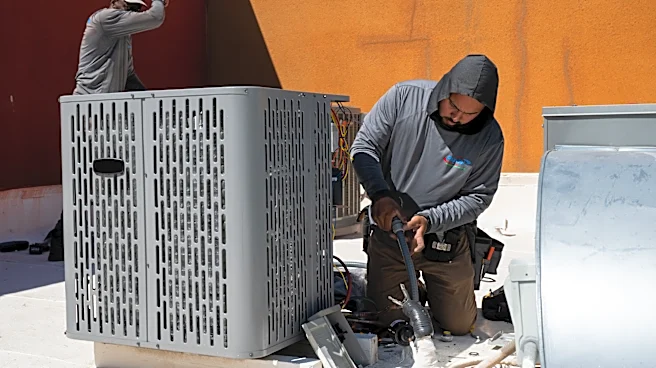
To address the undercounting of heat-related deaths, the investigation suggests that changes are needed in how medical professionals, coroners, and medical examiners collect death information. This includes training death investigators to identify subtle clues of heat's influence, such as unaddressed air conditioner issues or medications that affect heat sensitivity. Pima County, Arizona, where Adam Willson lived, has already begun implementing such strategies, leading to improved identification of heat-related deaths. However, these changes require time, money, and commitment, and many deaths still do not undergo medical examiner investigation. Future efforts will likely focus on standardizing reporting practices nationwide, increasing awareness among healthcare providers about the signs of heat-related illness, and investing in research to better understand the complex interplay between heat and pre-existing conditions. The long-term goal is to ensure that the true toll of heat is accurately reflected, enabling more effective public health responses and climate adaptation measures.
Beyond the Headlines
The undercounting of heat-related deaths reveals a deeper societal challenge related to how we perceive and respond to environmental threats. Unlike more dramatic events, heat often acts as a 'silent killer,' exacerbating existing vulnerabilities without leaving obvious forensic evidence. This makes it easier to overlook and, consequently, to deprioritize in public discourse and policy. The ethical dimension lies in the responsibility of public health systems to accurately document causes of death, especially when preventable environmental factors are at play. The story of Adam Willson highlights the human cost of this oversight and the emotional burden on families who feel their loved ones' deaths are not fully acknowledged. Culturally, there's a need to shift perceptions of heat from a mere discomfort to a serious public health hazard, particularly as climate change intensifies. This requires not only better data collection but also a broader societal recognition of the interconnectedness of environmental conditions, health outcomes, and social equity, ensuring that vulnerable populations are not disproportionately affected and their suffering is not rendered invisible by inadequate record-keeping.