







What's Happening?
U.S. Army Secretary Daniel Driscoll and Mexico's Secretary of National Defense have signed a declaration of intent to enhance strategic and operational capabilities through defense innovation and new technologies. This agreement, announced by U.S. Ambassador
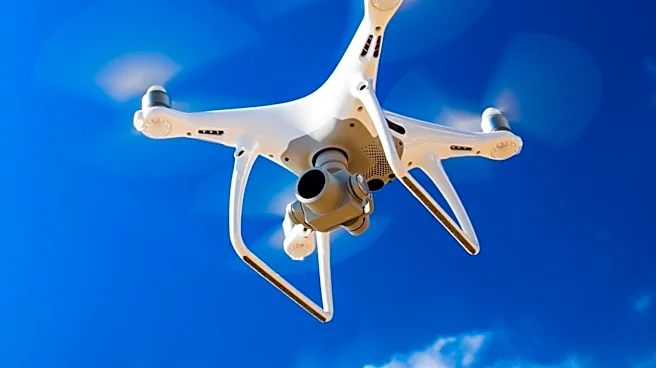
to Mexico Ronald Johnson, will allow Mexico to access the U.S. Army's digital market to acquire unmanned aerial systems (drones) and counter-unmanned aerial systems (anti-drones) at competitive costs. The primary goal of this initiative is to strengthen Mexico's ability to combat drug cartels and address bilateral security challenges. Ambassador Johnson emphasized that this cooperation, supported by President Trump and Mexican President Claudia Sheinbaum, sends a clear message to criminals that they will be apprehended and held accountable. This development follows the recent full resumption of U.S. official activities in Michoacán, after security conditions were evaluated and measures deployed by Mexico, ending a suspension that impacted avocado export inspectors.
Why It's Important?
This agreement signifies a deepening of security cooperation between the United States and Mexico, particularly in the fight against organized crime. For the U.S., providing advanced drone and anti-drone technology to Mexico directly supports its national security interests by helping to destabilize cartels that contribute to drug trafficking and violence across the border. This move could lead to more effective interdiction of illegal activities and a reduction in the flow of illicit substances into the U.S. For Mexico, gaining access to these technologies at competitive prices is crucial for modernizing its defense capabilities and enhancing its capacity to confront powerful and technologically sophisticated cartels. The collaboration also underscores a shared commitment to regional stability and law enforcement, potentially fostering greater trust and coordination on other bilateral issues. The involvement of President Trump and Mexican President Sheinbaum highlights the high-level political will behind this joint effort.
What's Next?
Following the signing of the declaration of intent, the next steps will likely involve Mexico initiating the procurement process through the U.S. Army's digital market. This will entail identifying specific drone and anti-drone systems that meet Mexico's operational needs and budgetary constraints. Training programs for Mexican military personnel on the operation and maintenance of these advanced systems will also be crucial. The effectiveness of this new technological deployment will be closely monitored, with potential for further collaboration or adjustments based on initial results in combating cartels. Additionally, this agreement could pave the way for future defense technology transfers or joint security operations between the two nations. The continued political backing from both President Trump and President Sheinbaum will be essential for the sustained success and expansion of these cooperative efforts.
Beyond the Headlines
The acquisition of advanced drone and anti-drone systems by Mexico, facilitated by the U.S., carries significant implications beyond immediate cartel interdiction. Ethically, the deployment of such technology raises questions about surveillance, privacy, and the potential for collateral damage in conflict zones. Legally, the use of drones in domestic law enforcement operations within Mexico will need to adhere to national and international legal frameworks, particularly concerning human rights and rules of engagement. Culturally, this technological upgrade could shift public perception of the government's capacity to maintain order and security, potentially increasing trust or, conversely, raising concerns about militarization. In the long term, this development could lead to a more technologically advanced approach to border security and counter-narcotics efforts across the Western Hemisphere, setting a precedent for how nations collaborate to combat transnational criminal organizations using cutting-edge defense innovations.