





What's Happening?
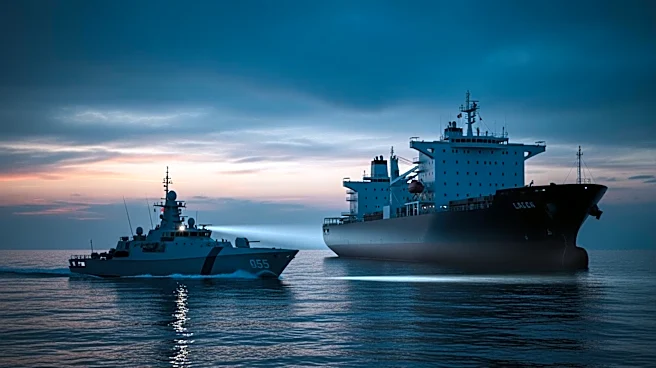
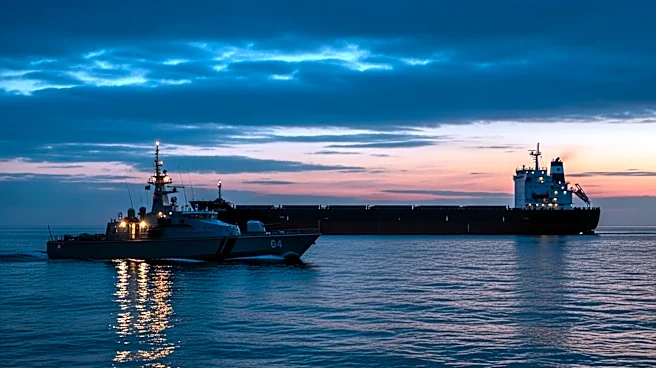
Iran has accused the United States of violating a ceasefire agreement after the USS Spruance fired on an Iranian-flagged cargo ship in the Gulf of Oman. This incident has led to a surge in oil prices, with West Texas Intermediate (WTI) crude trading up
7.5% and Brent North Sea crude gaining 6.5%. The Strait of Hormuz, a vital conduit for global oil and liquefied natural gas, has been virtually closed since the onset of the US-Israeli conflict with Iran. Iran's military has vowed to respond to the US actions, further escalating tensions in the region.
Why It's Important?
The closure of the Strait of Hormuz and the rise in oil prices have significant implications for global energy markets and economies. As a major passage for oil and gas supplies, disruptions in this region can lead to increased fuel costs and affect industries dependent on stable energy prices. The geopolitical tensions between the US and Iran could further destabilize international relations and trade, impacting global economic growth. The situation also highlights the fragility of peace agreements and the potential for conflict escalation in volatile regions.
What's Next?
With the ceasefire agreement in jeopardy, the potential for renewed negotiations remains uncertain. Iran's vow to respond to US actions could lead to further military engagements, impacting global oil supply chains and market stability. Political leaders and energy companies will closely monitor developments, as any escalation could have far-reaching consequences for international relations and economic stability.