







What's Happening?
A computer networking device at a Federal Aviation Administration (FAA) facility in El Dorado, Arkansas, is under federal investigation for its role in a nationwide aviation shutdown. The incident, which occurred on Friday, November 13, involved a newly
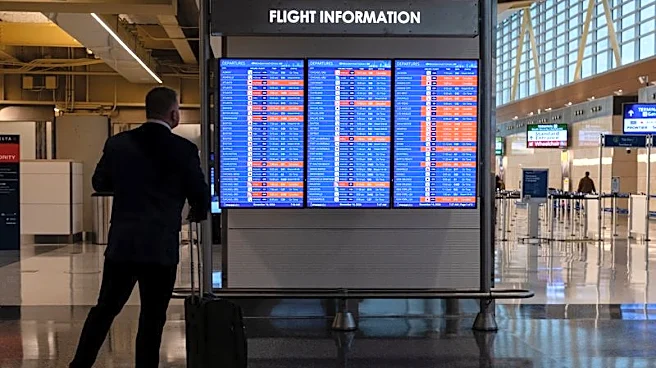
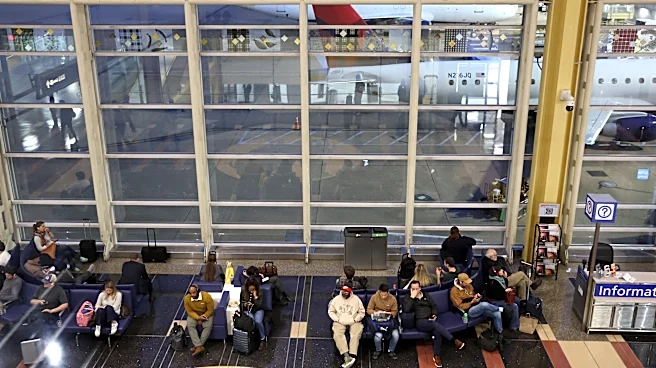
installed communications router that reportedly generated a massive surge in network traffic, destabilizing critical air traffic control systems. This led to a nationwide ground stop lasting nearly five hours, causing widespread flight delays and cancellations across the United States. Approximately 12,462 flights were canceled, though not all were directly attributed to the ground stop. The disruption significantly impacted major airports, including Frederick W. Smith Airport (Memphis) and Bill and Hillary Clinton National Airport (Little Rock), where departing flights were temporarily halted and numerous delays and cancellations persisted into the weekend. FedEx flight operations at its Memphis hub were also affected, prompting the company to implement contingency plans. Investigators are also examining a second router in Amarillo, Texas, that exhibited similar issues, raising questions about the broader network modernization effort.
Why It's Important?
This incident highlights the critical vulnerability of the nation's air traffic control infrastructure to single points of failure, even in seemingly minor facilities. The widespread disruption underscores the profound economic and social impact that can result from technical malfunctions within essential services. Thousands of travelers faced significant inconvenience, missed connections, and financial losses due to canceled and delayed flights. For businesses like FedEx, which rely heavily on timely air cargo, such disruptions can lead to substantial operational challenges and potential financial repercussions. The event also brings into question the efficacy and security of ongoing modernization efforts within the FAA, particularly the transition from copper to fiber-optic telecommunications lines. The investigation's findings will be crucial for ensuring the resilience and reliability of the U.S. air travel system, which is vital for both national commerce and public mobility. The incident also raises concerns about the potential for similar vulnerabilities in other critical national infrastructures.
What's Next?
Federal investigators are continuing to determine the definitive root cause of the router malfunction, examining whether it was due to defective hardware, installation errors, or design weaknesses in the broader communications network. Both problematic routers from Arkansas and Texas have been sent to an L3Harris laboratory in Florida for detailed examination. The FAA has taken precautionary measures by disabling similar functionality on approximately 60 other routers throughout the system to prevent recurrence. Transportation Secretary Sean Duffy has confirmed the ongoing investigation, with FAA personnel and the FBI assisting. The findings of this investigation will likely inform future protocols for telecommunications upgrades and network management within the FAA. Airlines are working to restore normal schedules, with some, like Delta Air Lines, extending flexible rebooking options for affected customers. The incident may also prompt a review of the FAA's modernization timeline and the oversight of its contractors.
Beyond the Headlines
The incident exposes a deeper challenge in maintaining complex, interconnected national infrastructures: the balance between modernization and operational stability. While upgrading aging systems is essential, the process itself can introduce new vulnerabilities if not meticulously managed. The fact that a single router in a relatively small facility could trigger a nationwide shutdown underscores the 'butterfly effect' in highly integrated systems. This event could lead to increased scrutiny of government contracts for critical infrastructure projects and a re-evaluation of redundancy and fail-safe mechanisms within the FAA's network. It also highlights the ethical responsibility of technology providers and government agencies to ensure public safety and minimize disruption during system overhauls. The long-term implications could include policy changes aimed at enhancing cybersecurity measures, improving disaster recovery protocols, and potentially increasing funding for more robust and resilient air traffic control systems to prevent similar occurrences in the future.