




What's Happening?
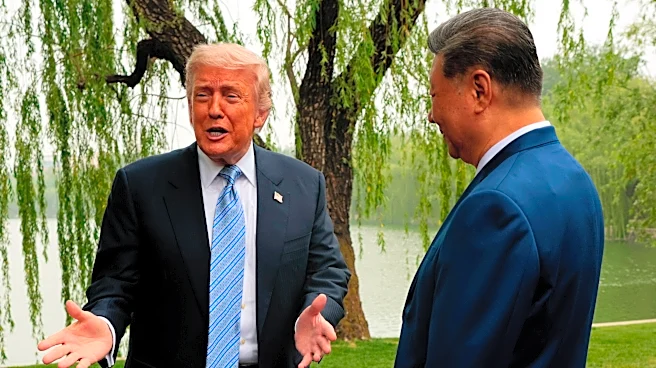
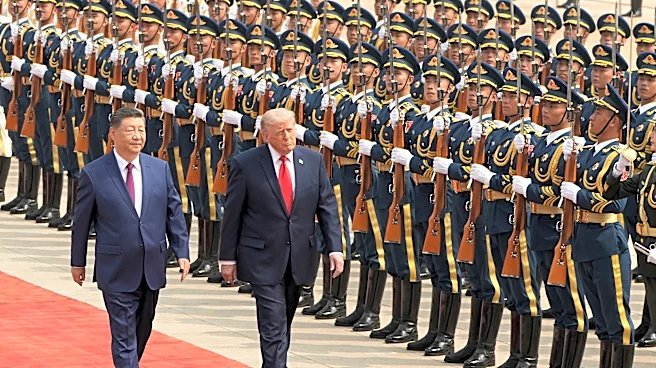
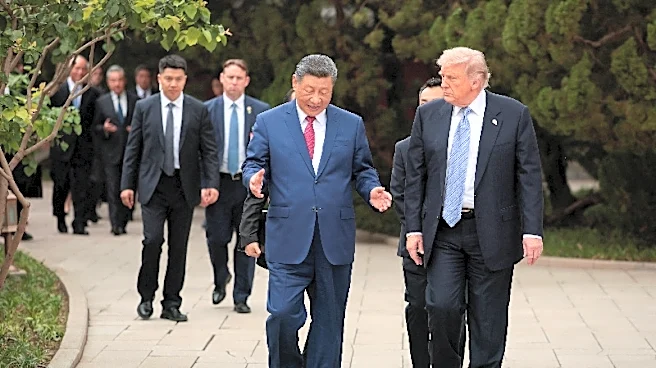
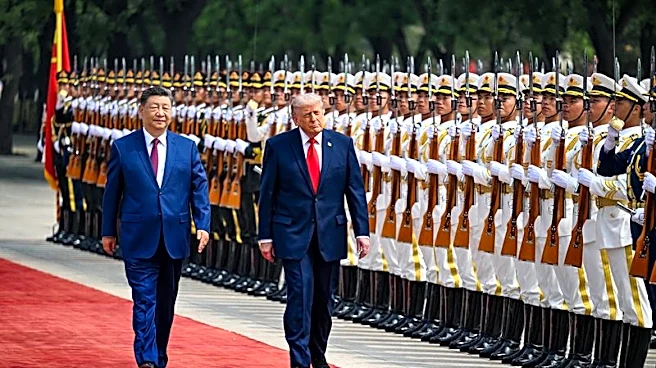
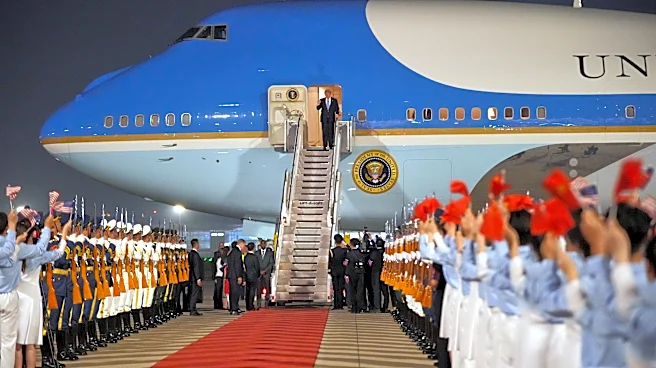
President Trump recently concluded a state visit to China, where he aimed to reset relations with Chinese President Xi Jinping. Despite the visit being hailed as a breakthrough in terms of diplomatic engagement, it resulted in few concrete achievements.
The U.S. delegation left with modest trade agreements, including China's commitment to purchase 200 Boeing jets and invest in American agriculture, though these deals fell short of restoring pre-2025 investment levels. Discussions also touched on sensitive issues such as the Iran conflict and the strategic Strait of Hormuz, with Trump expressing a shared concern with Xi over Iran's nuclear ambitions. However, no significant agreements were reached, and China's state media portrayed the visit as a 'reset' in relations. The visit highlighted a new power dynamic, with Trump showing deference to Xi, acknowledging China's rising global influence.
Why It's Important?
The visit underscores the complexities of U.S.-China relations, particularly in the context of ongoing trade tensions and geopolitical challenges. The limited outcomes of the visit reflect the difficulties in achieving substantial progress on contentious issues such as trade imbalances and regional security. The modest trade deals, while beneficial, do not address the broader economic tensions between the two nations. Additionally, the discussions on Iran and the Strait of Hormuz highlight the strategic importance of these issues for both countries, with potential implications for global energy markets and regional stability. The visit also illustrates the shifting power dynamics, with China asserting its influence on the global stage, which could impact future U.S. foreign policy and economic strategies.
What's Next?
Future engagements between the U.S. and China are anticipated, with both leaders expected to meet at upcoming international summits. President Trump has extended an invitation to President Xi for a state visit to Washington, which could provide another opportunity to address unresolved issues. The ongoing trade negotiations and geopolitical tensions, particularly regarding Iran and Taiwan, will likely remain focal points in U.S.-China relations. The outcomes of these discussions could influence global economic trends and diplomatic alignments, with potential impacts on international trade policies and security arrangements.