
What's Happening?
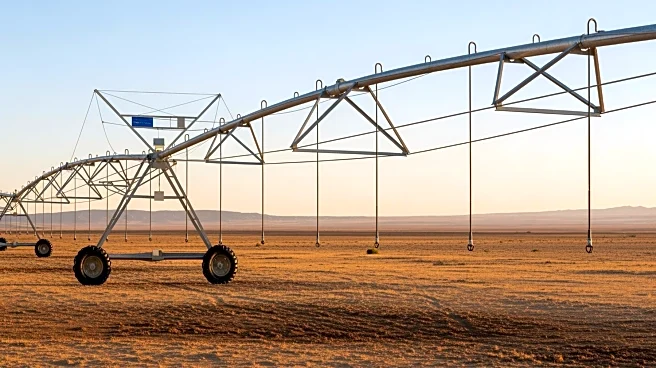
The National Development Agency (NDA) of Libya has signed a Memorandum of Understanding (MoU) with FarmTech, Valley Valmont, and New Holland Agriculture to deploy 1,000 center pivot irrigation systems
in southern Libya. This agreement aims to enhance agricultural productivity and food security in the region's desert and semi-arid zones. The project, initially discussed in December 2025, involves the delivery of advanced irrigation technology and agricultural equipment. This initiative is part of the NDA's strategy to modernize Libya's agricultural sector through international partnerships and large-scale projects.
Why It's Important?
The deployment of 1,000 pivot irrigation systems is a critical step towards improving food security and agricultural sustainability in Libya. By enhancing irrigation infrastructure, the project aims to increase crop yields and reduce the country's reliance on food imports. This initiative supports Libya's broader goals of achieving self-sufficiency in food production and promoting economic stability. The involvement of international partners like FarmTech and Valley Valmont highlights the importance of global collaboration in addressing food security challenges. The project also aligns with efforts to modernize Libya's agricultural sector, potentially leading to increased investment and development in the region.
What's Next?
Following the signing of the MoU, the next steps involve the detailed planning and implementation of the irrigation systems. The NDA and its partners will likely focus on site selection, equipment procurement, and workforce training to ensure the project's success. The initiative may also prompt further discussions on agricultural innovation and sustainability in Libya. As the project progresses, stakeholders, including local farmers and government officials, will monitor its impact on food security and economic development. The success of this project could pave the way for similar initiatives in other regions of Libya.
Beyond the Headlines
The introduction of advanced irrigation systems in southern Libya has broader implications for the country's agricultural sector. By adopting modern technology, Libya can improve water management and increase agricultural efficiency, which is crucial in a region facing water scarcity. This project also highlights the potential for renewable energy integration, as solar-powered irrigation systems could further enhance sustainability. Additionally, the initiative underscores the importance of international cooperation in addressing global food security challenges, setting a precedent for future partnerships between Libya and other countries.