





What's Happening?
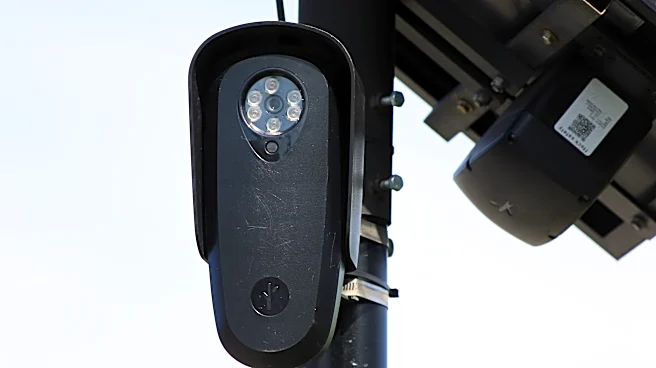
Minnesota police departments are demonstrating significant inconsistencies in how they share data collected from automatic license plate reader (ALPR) cameras, specifically those provided by Flock Safety. While some agencies, like Faribault police, restrict
access to their county 911 center, others, such as St. Paul police, have granted access to over 60 Minnesota agencies. Stillwater and New Brighton police departments extend access to hundreds of agencies, including some located out of state and as far as the East Coast. This variation in data sharing practices has prompted concerns from organizations like the American Civil Liberties Union of Minnesota (ACLU-MN) regarding privacy and the potential for uncontrolled dissemination of sensitive information. Over 40 agencies in Minnesota utilize 'Flock transparency portals,' which are optional public data sites that reveal the extent of data sharing with external entities. The ACLU-MN emphasizes that once data is shared with an out-of-state law enforcement agency, it becomes functionally impossible to track its further distribution, despite Minnesota law requiring vetting and an active investigation for such requests.
Why It's Important?
The disparate approaches to sharing ALPR data among Minnesota police departments carry significant implications for individual privacy and civil liberties. The broad sharing of this data, particularly with out-of-state agencies, creates a complex web where the original local agency loses control over how the information is used and further distributed. This raises questions about the potential for misuse, unauthorized access, and the creation of extensive surveillance networks without adequate oversight. While law enforcement agencies, such as Faribault Police Chief John Sherwin, assert that these cameras aid in solving and preventing crimes and locating missing persons, the ACLU-MN highlights the risk that data shared across state lines may not adhere to Minnesota's legal requirements for vetting and active investigation. The lack of consistent policy and oversight across departments could lead to a patchwork of privacy protections, potentially eroding public trust in law enforcement's use of technology and creating vulnerabilities for individuals whose movements are tracked.
What's Next?
The ongoing debate surrounding the sharing of Flock camera data in Minnesota suggests a need for clearer, more standardized policies across all law enforcement agencies. The ACLU-MN's concerns about the functional impossibility of tracking data once it leaves the state indicate that legislative or regulatory action may be necessary to establish stricter guidelines for interstate data sharing. Agencies like Hopkins Police Department, which have opted against using transparency portals but require data-sharing agreements affirming compliance with Minnesota state law, offer a potential model for increased local governance and accountability. Future discussions will likely focus on balancing public safety needs with individual privacy rights, potentially leading to new state-level regulations or increased scrutiny of existing data-sharing agreements. The evolving capabilities of ALPR technology, particularly with advancements in AI and computing power, will also necessitate continuous evaluation of privacy implications and the potential for expanded surveillance.
Beyond the Headlines
The varying practices in sharing ALPR data in Minnesota underscore a broader national challenge concerning the balance between technological advancements in surveillance and the protection of individual privacy. The 'Flock transparency portals' highlight a tension between the desire for public accountability and the practical difficulties of controlling data once it is disseminated. The ACLU-MN's warning about the future capabilities of these technologies, particularly their potential to track individuals' movements and associations, points to a future where the line between public safety and pervasive surveillance could become increasingly blurred. This situation raises fundamental ethical questions about the scope of government monitoring in a democratic society and the long-term societal impact of ubiquitous data collection. The lack of uniform policy also creates a legal gray area, where individuals' rights may be subject to different interpretations and protections depending on which agency collects and shares their data.