




What's Happening?
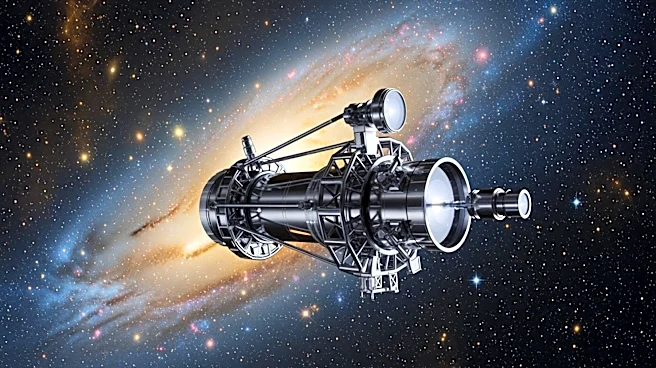
NASA's Transiting Exoplanet Survey Satellite (TESS) has released its most detailed view of the starry sky, showcasing nearly 6,000 colored dots representing confirmed or candidate exoplanets. This achievement marks the culmination of TESS's second extended
mission, which concluded in September 2025. The mission, which began in April 2018, involves scanning wide sections of the sky to detect brightness changes in stars, indicating the presence of orbiting planets. TESS has been instrumental in identifying planets of various sizes, including those in the habitable zone where liquid water could exist, a key factor in the search for extraterrestrial life.
Why It's Important?
The TESS mission's findings significantly enhance our understanding of the universe and the potential for life beyond Earth. By identifying exoplanets in the habitable zone, TESS contributes to the broader scientific endeavor of finding life-supporting planets. This mission supports NASA's long-term goals of exploring and understanding the cosmos, potentially leading to future missions focused on these newly discovered worlds. The data collected by TESS also aids in refining models of planetary formation and evolution, providing valuable insights for astronomers and researchers worldwide.