



What's Happening?
Governor Patrick Morrisey has announced a $3.2 million water filtration initiative aimed at providing clean drinking water to approximately 5,000 homes in McDowell and Mingo counties, West Virginia. This initiative is expected to benefit around 10,000
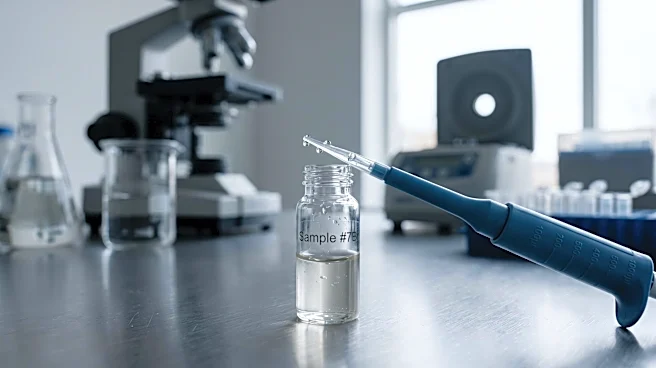
residents who currently rely on private wells, springs, and cisterns. The plan involves the installation of household water filtration systems, a year's supply of replacement filters, and settling tanks for homes with heavy iron issues. Of the total funding, $1.2 million is allocated to 1,000 households facing the most severe water problems, with the remaining $2 million supporting an additional 4,000 homes. The announcement follows a 'water listening tour' conducted by Governor Morrisey.
Why It's Important?
This initiative is crucial for addressing a significant public health and quality of life issue in rural West Virginia. Many residents in McDowell and Mingo counties depend on private water sources that may be susceptible to contamination, including high levels of metals like copper and barium, as highlighted by Richard Altizer, founder of Mountain Water Watch. Providing access to clean drinking water can lead to improved health outcomes, reduced incidence of waterborne illnesses, and enhanced overall well-being for thousands of West Virginians. The investment also underscores the state's commitment to infrastructure development and addressing long-standing environmental challenges. However, the effectiveness of the initiative is being questioned by some, like Altizer, who believe that countertop filtration systems may not adequately remove heavy metals, suggesting a potential gap between the proposed solution and the actual needs of the affected communities.
What's Next?
The implementation of the $3.2 million water filtration initiative will proceed with the distribution and installation of countertop water purification systems, replacement filters, and settling tanks in the targeted 5,000 homes. The initial phase will prioritize 1,000 households with the most severe water issues. Monitoring the effectiveness of these systems, particularly in addressing heavy metal contamination, will be critical. Richard Altizer's concerns about the limitations of the proposed filtration methods suggest that there may be ongoing discussions and potential adjustments to the initiative if the initial results do not meet expectations. The success of this program could influence future state-level investments in water infrastructure and public health initiatives across West Virginia, especially in other rural areas facing similar challenges.
Beyond the Headlines
The water filtration initiative in West Virginia touches upon a broader national issue concerning access to clean water in rural and underserved communities. While the immediate goal is to provide filtration systems, the underlying problem of contaminated private water sources points to systemic challenges in infrastructure, environmental regulation, and public health. The skepticism from water advocates regarding the efficacy of the proposed solutions highlights the complexity of addressing water quality issues, where simple fixes may not be sufficient for complex contaminants like heavy metals. This situation could spark further debate on the need for more comprehensive and long-term solutions, such as upgrading public water systems or implementing more stringent environmental protections. It also underscores the importance of community engagement and expert consultation in designing effective public health interventions, ensuring that solutions truly meet the needs of the affected population.