





What's Happening?
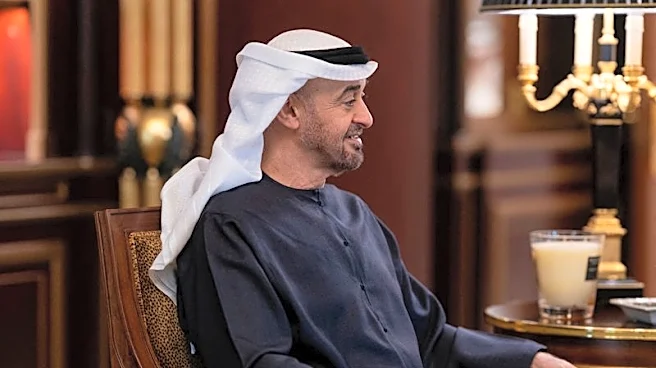
Israel and the United Arab Emirates (UAE) have deepened their military and diplomatic ties in response to the ongoing conflict with Iran. This collaboration marks a significant shift in Middle Eastern alliances, as the UAE distances itself from traditional
Arab partners and aligns more closely with Israel and Western nations. The UAE's decision to withdraw from OPEC further underscores its strategic realignment. The deployment of Israel's Iron Dome missile defense system in the UAE highlights the growing military cooperation between the two countries, driven by shared security concerns and a common adversary in Iran.
Why It's Important?
The strengthening of Israel-UAE relations represents a major geopolitical shift in the Middle East, with potential implications for regional stability and power dynamics. The UAE's pivot away from traditional Arab alliances could lead to a realignment of regional partnerships, affecting economic and security cooperation. This development also reflects the broader impact of the Iran conflict on Middle Eastern politics, as countries reassess their strategic priorities and alliances. The enhanced military cooperation between Israel and the UAE could influence future security arrangements and diplomatic engagements in the region.
What's Next?
As Israel and the UAE continue to build on their partnership, further military and economic collaborations are likely. The UAE's departure from OPEC may lead to changes in global oil markets and energy policies. Additionally, the evolving regional alliances could prompt other Middle Eastern countries to reconsider their diplomatic and security strategies. The ongoing conflict with Iran will remain a key factor in shaping these developments, as stakeholders seek to navigate the complex geopolitical landscape.