







What's Happening?
Colorado Governor Jared Polis has formally requested an expedited Major Disaster Declaration from President Trump through the Federal Emergency Management Agency (FEMA). This request, made on Saturday, October 31, 2026, seeks nearly $27 million in federal
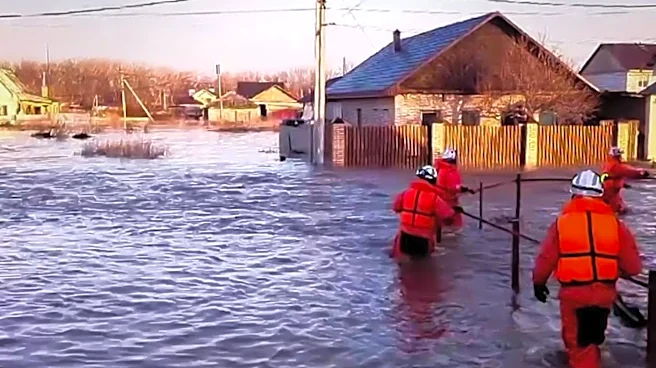
aid to assist southwestern Colorado in recovering from severe flooding and debris flows that occurred between October 22-25. The declaration specifically targets Archuleta and Rio Grande counties, where initial damage assessments have identified approximately $26.989 million in eligible costs for Public Assistance. The requested aid includes FEMA Public Assistance (Categories A-G) for debris removal, emergency protective measures, and repairs to public infrastructure such as roads, bridges, utilities, and parks. Additionally, Governor Polis is seeking Hazard Mitigation Grant Program funding to implement measures that will reduce future flood and debris-flow damage. The state has already deployed rescue teams, delivered supplies, and committed state funding, but the documented damage exceeds what state and local resources can manage alone. Approximately 100 homes in Archuleta County remained inaccessible as of October 29, indicating that the total damage costs are likely to increase as more areas become reachable.
Why It's Important?
This request for federal assistance is crucial for the affected communities in southwestern Colorado, as the scale of damage from the recent floods has overwhelmed local and state resources. Federal funding, if approved, would provide essential financial support to rebuild critical public infrastructure, including damaged roads, bridges, and utilities, which are vital for the region's connectivity and daily life. The Hazard Mitigation Grant Program funding is particularly significant as it aims to implement long-term solutions to reduce vulnerability to future natural disasters, potentially saving lives and property in the long run. Without this federal aid, the burden of recovery would fall heavily on local taxpayers and state budgets, potentially delaying essential repairs and hindering the region's economic recovery. The approval of this declaration would demonstrate the federal government's commitment to supporting states in times of crisis, providing a lifeline to residents and businesses struggling to recover from the devastating impacts of the flooding.
What's Next?
The Major Disaster Declaration request is currently awaiting federal approval from President Trump. The timeline for this approval is uncertain, as the decision rests with the President. If approved, federal funds would be released to support recovery efforts in Archuleta and Rio Grande counties. State, federal, and local officials will continue joint damage assessments in other impacted counties, and additional costs may be added to the request as more damage is identified. Residents in affected areas are encouraged to document damage and submit reports through county damage-reporting systems, though this is not an application for financial assistance. The Southern Ute Indian Tribe, whose lands were also severely impacted, will pursue FEMA assistance independently. Updates on the status of the state's request and any potential requests for Individual Assistance for homeowners and businesses will be shared as they become available. The state has already secured $6.5 million in quick-release funding from the Federal Highway Administration for repairs to major highways, separate from the FEMA request.
Beyond the Headlines
The request for federal aid highlights the increasing frequency and intensity of extreme weather events, underscoring the growing need for robust disaster preparedness and response mechanisms at all levels of government. The situation also brings to light the complex interplay between state and federal responsibilities in disaster recovery, where state resources are often insufficient to handle large-scale catastrophes. The inclusion of Hazard Mitigation Grant Program funding in the request points to a broader shift towards proactive measures to reduce future risks, rather than solely focusing on post-disaster recovery. This proactive approach is essential for building resilience in communities vulnerable to natural disasters. Furthermore, the independent pursuit of FEMA assistance by the Southern Ute Indian Tribe underscores the unique sovereignty and needs of tribal nations in disaster response, often requiring separate and direct engagement with federal agencies. The outcome of this request will not only impact the immediate recovery of southwestern Colorado but also set precedents for future federal responses to similar events.